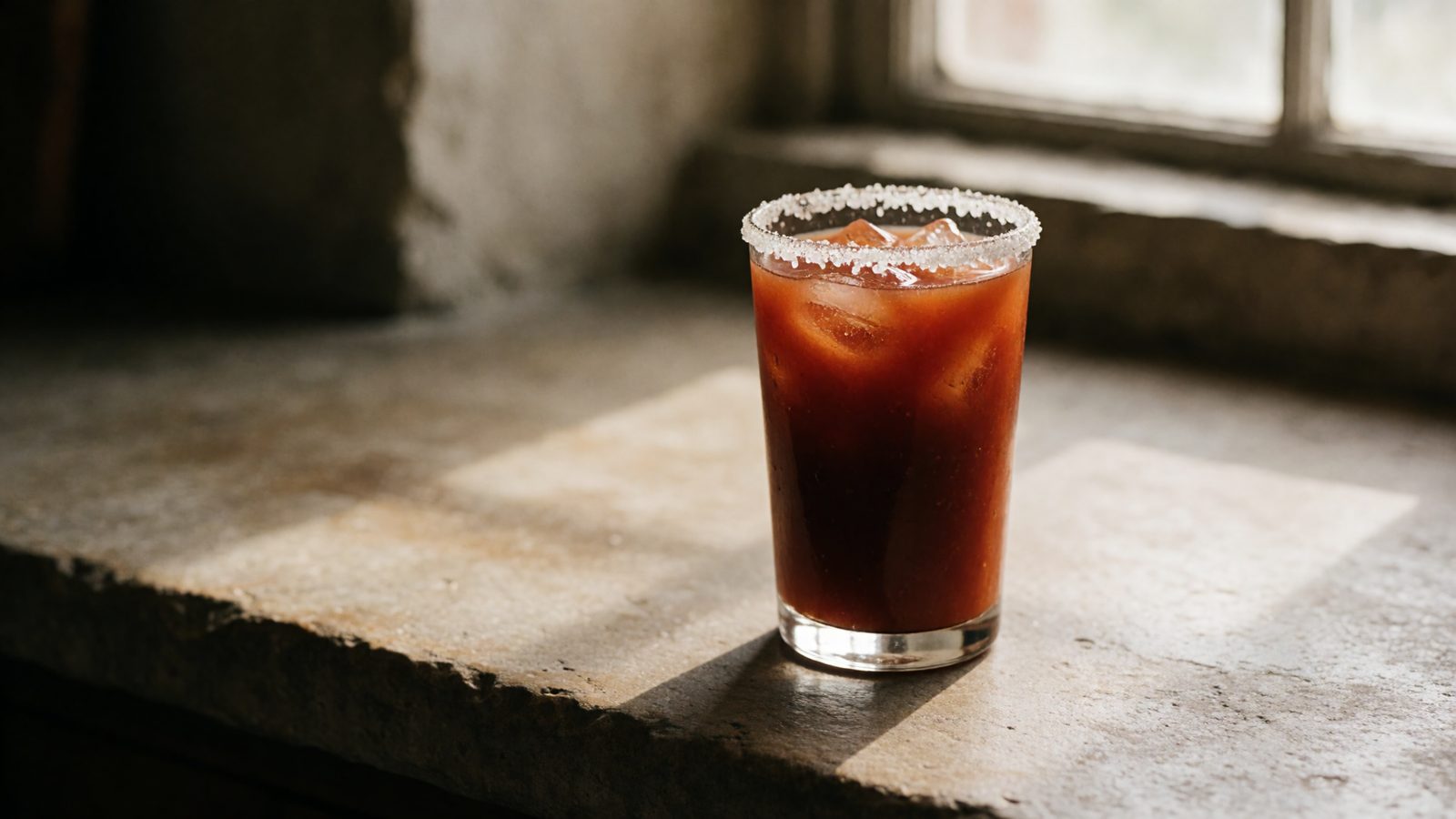
You wake up after a solid brunch session, two or three Bloody Marys deep. You paced yourself, drank water, did everything right, and you’re not exactly hungover. But your face looks puffy, your rings are tight, and your eyes have that faint, swollen look. That’s not alcohol. That’s the sodium in Bloody Mary mix, and a lot of it.
The Sodium in Bloody Mary, Before the Vodka Goes In
Most commercial Bloody Mary mixes run somewhere between 600 and over 900 milligrams of sodium per serving, before you’ve added anything else. And you always add something else: Worcestershire sauce brings sodium, prepared horseradish brings sodium, hot sauce brings sodium, olive brine brings sodium, and a celery salt rim adds still more on top. Stack a loaded garnish tower on top of all that, olives, bacon, cured meats, pickles, and the drink stops being a cocktail with a salty edge and starts being a genuine sodium bomb with a celery stalk in it.
Why sodium specifically causes the puffiness
Sodium pulls water into your bloodstream and tissues by osmosis, and a large sodium load, especially combined with alcohol’s own effect on kidney function, leads to short-term water retention. Puffiness in the face and tightness in rings and around joints are common, visible signs of that retention. It resolves on its own within a day as your kidneys process the excess sodium, but a glass this salty on a semi-regular basis is worth addressing at the source rather than just waiting it out each time.
Building a genuinely lower-sodium version
Start with no-salt-added tomato juice, and actually read the label: “low sodium” and “no salt added” are not the same claim, and a “low sodium” mix can still be bringing a meaningful amount to the glass. From there, control every other ingredient deliberately rather than free-pouring. A measured dash of Worcestershire instead of a heavy splash. A prepared horseradish rather than one packed in a salty brine. A hot sauce you’ve tasted on its own and actually know the salt level of, rather than assuming.
Building your own base from scratch is the only way to fully control the sodium load. If you’d rather use a pre-made mix, compare labels rather than assuming all bottled mixes are equally salty; see this site’s supermarket mix showdown for a real side-by-side of what’s actually on a few major labels.
On the rim and in the seasoning, celery salt is still worth using since it’s doing real flavor work beyond just being salty, but use it with intention rather than a heavy, unmeasured hand, and consider skipping a second salted element (a briny olive garnish on top of an already-salted rim, for instance) rather than stacking two or three sodium sources into the same glass.
A reasonable target
There’s no single “correct” sodium number for a cocktail, but a homemade build using no-salt-added tomato juice, a measured seasoning hand, and a single salted rim can land well under half of what a heavily garnished, bottled-mix-based drink often carries. A great Bloody Mary should read as bold, layered, and savory. It shouldn’t leave you looking like you slept face-down on a bag of pretzels.
Frequently Asked Questions
Are Bloody Marys bad for blood pressure?
A single heavily salted drink isn’t a long-term blood pressure risk on its own, but someone already managing sodium intake for blood pressure reasons should treat a loaded Bloody Mary as a meaningful contributor to their daily total, not an afterthought.
How do you lower the sodium in a brunch cocktail without losing flavor?
Use no-salt-added tomato juice as the base, measure rather than free-pour salty seasonings like Worcestershire and hot sauce, and lean on flavor sources that aren’t primarily salt, like fresh citrus, black pepper, and horseradish’s heat, to keep the drink interesting.
What is the lowest-sodium Bloody Mary mix?
Of commercial mixes compared on this site, Zing Zang’s label runs lowest per serving, though serving sizes differ between brands enough that a direct ounce-for-ounce comparison takes some math. See the supermarket mix showdown for the full label comparison.
Is clamato juice lower in sodium than tomato juice mixes?
It varies by brand and isn’t a given either way; check the specific label rather than assuming Clamato is automatically lower or higher sodium than a tomato-only mix.
Sources
- Sodium and water-retention physiology (osmotic fluid shift into tissue) is standard, widely established physiology; no single claim above depends on a specific citation beyond general medical knowledge already reflected in this site’s hangover physiology piece, which cites Cleveland Clinic on the related alcohol-and-dehydration mechanism.
A note on how this was written
This page merges Gene’s original puffy-face post (published April 2026) with expanded sodium-reduction guidance. The original post’s own voice and opinions are preserved in substance; punctuation was updated to match this site’s current no-em-dash style guide, which postdates that original post. The physiology (sodium’s osmotic effect on fluid retention) is standard medical knowledge, not a personally tested claim.
Related Reading
- The Supermarket Bloody Mary Mix Showdown
- What’s Actually In Clamato?
- No Clamato? The Substitutes Ranked
- The Hangover Myth
- For the classic build this guide adapts, see the bloody mary recipe.
Leave a Reply