The Bloody
Molly
This Bloody Molly recipe leans on Irish whiskey for a malted, honeyed backbone that changes the geometry of a morning drink — lighter and less smoky than a bourbon build.
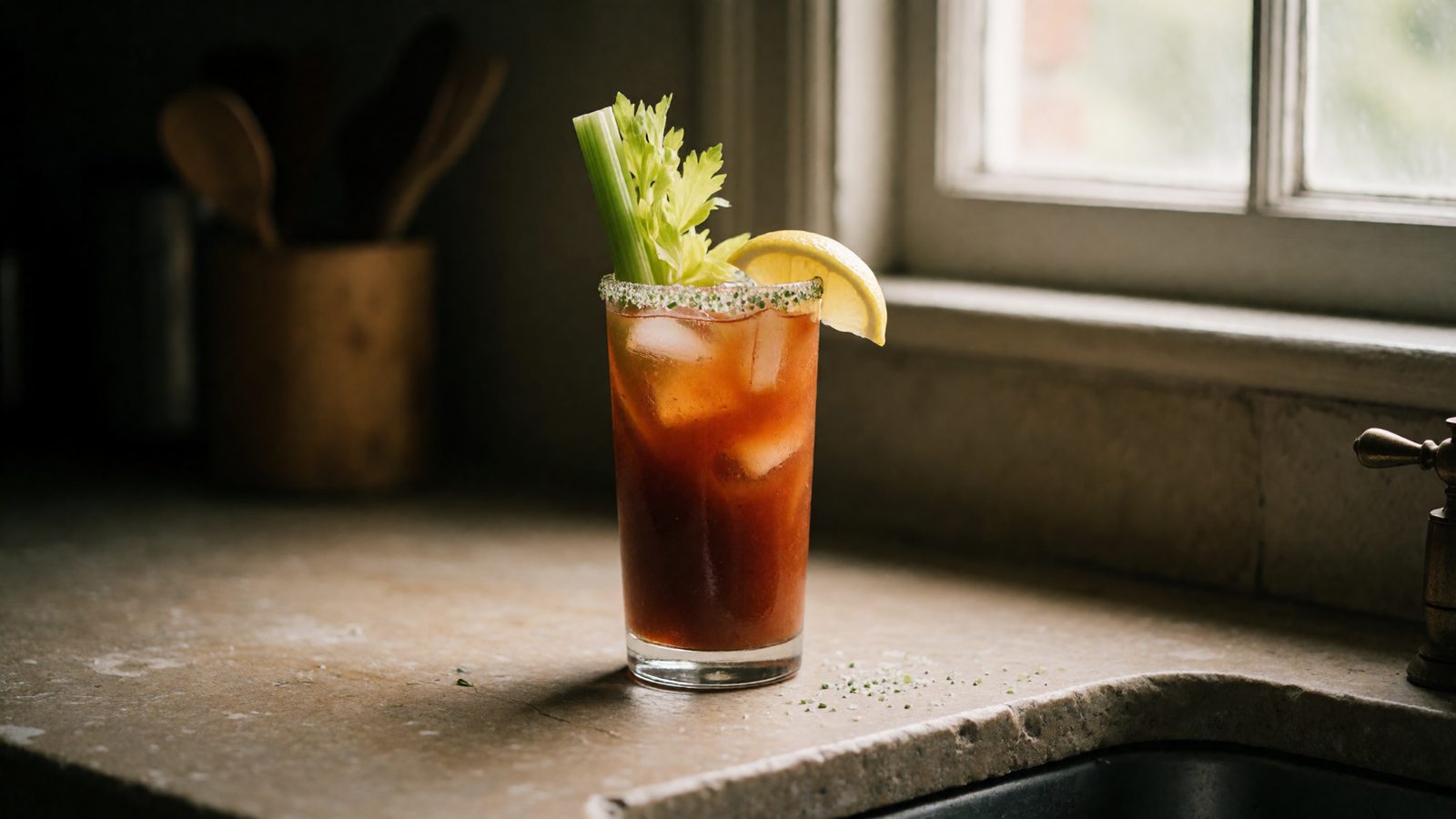
[GENE: any personal note on which Irish whiskey brand you’d actually reach for here would strengthen this section.] Irish whiskey is triple-distilled and usually unpeated, which means none of the smoke a Scotch build carries and a rounder, lighter sweetness than bourbon’s vanilla-and-oak profile. That makes it a gentler base for a Bloody Mary — the whiskey supports the tomato rather than competing with it.
- Irish whiskey (blended, not single pot still)2 oz
- Tomato juice4 oz
- Lemon juice0.5 oz
- Worcestershire sauce2 dashes
- Hot sauce2 dashes
- Honey, warmed slightly to loosen0.25 oz
- Celery salt, for the rim1 tbsp
- Ice1 fill
- Celery stalk and lemon wedge, for garnish1 each
- 1Salt the rim of a tall highball glass with celery salt, using a lemon wedge to wet the rim first.
- 2Fill the glass with ice.
- 3Add the Irish whiskey, lemon juice, Worcestershire, hot sauce, and honey.
- 4Top with tomato juice.
- 5Stir gently, six to eight turns, until the honey is fully dissolved and no longer pooling at the bottom.
- 6Garnish with the celery stalk and a fresh lemon wedge on the rim.
Why Irish whiskey specifically
Irish whiskey is legally required to be triple-distilled (with rare single-distillation exceptions) and, unlike most Scotch, is almost never made with peated malt, which is what strips the smoke character out entirely. What’s left is a spirit that leans toward vanilla, honey, and a light grassy sweetness — gentler and rounder than bourbon’s char-forward vanilla-and-caramel profile, and entirely without the iodine-and-bonfire note a peated Scotch brings. That gentleness is exactly why this build adds a touch of real honey: bourbon’s own natural caramel notes do some of that sweetening work already, but Irish whiskey needs a small nudge to hit the same balance.
Bloody Molly vs. Bloody Derby
This site’s bourbon build, the Bloody Derby, leans into brown sugar and a heavier Worcestershire pour to match bourbon’s oak and char. The Bloody Molly is the lighter sibling: less smoke, less char, more honeyed sweetness, and a lemon-forward brightness that a bourbon build doesn’t need as much of. If you like the idea of a whiskey Bloody Mary but find bourbon too heavy for a morning drink, this is the version to make instead, not a variation on the same recipe.
Blended vs. single pot still
Standard blended Irish whiskey (the most widely available style) is the right call here — it’s built to be smooth and approachable, which is exactly what a mixed drink needs. Single pot still Irish whiskeys are richer and spicier, closer to a bourbon in weight, and worth trying in this recipe once you’ve made the standard version and want a bigger, spicier build; they’re a reasonable substitution for bourbon in the Bloody Derby too, if you want to compare the two side by side.
Bloody Molly Recipe: Frequently Asked Questions
Can you use Irish whiskey in a Bloody Mary?
Yes — Irish whiskey’s lighter, honeyed, unsmoked profile works well in place of vodka, giving the drink a rounder sweetness than vodka’s neutrality or bourbon’s char. This recipe adds a touch of real honey to meet that profile halfway.
What is a Bloody Mary with bourbon called?
On this site, the bourbon version is the Bloody Derby. The Bloody Molly is its Irish whiskey counterpart — lighter and less smoky, built around honey rather than brown sugar.
Does the brand of whiskey matter as much as vodka brand does?
More, if anything — whiskey carries far more of its own flavor into the glass than a neutral spirit like vodka does, so a standard blended Irish whiskey and a heavier single pot still will produce noticeably different drinks. Start with a standard blended bottle for the balance this recipe is built around.
Is Bloody Molly a real, established cocktail name?
It’s an emerging name for the Irish-whiskey Bloody Mary variation rather than a decades-old classic like the Bloody Maria or the Caesar — search interest for it is real and growing, but don’t expect a bartender at a random bar to instantly recognize the name yet.
Sources
- Irish whiskey production requirements (triple distillation, typically unpeated) are defined by Irish and EU geographical indication rules for the category; no single external citation is needed for this general, well-established production fact.
A note on how this was written
The production facts about Irish whiskey (triple distillation, typically unpeated) are standard category knowledge, not a personal claim. The specific honey amount and the comparison to the Bloody Derby are a reasoned application of that knowledge to a Bloody Mary build, not a personally tasted and tuned result — a whiskey preference note from Gene is flagged above and would make this section stronger.
Related Reading
- The Bloody Derby — the bourbon version this recipe departs from
- Dry Sherry — The Bartender’s Best Kept Secret
- For the classic build this one departs from, see the bloody mary recipe.