Blog

  • The Last Stand of the Kitchen Cocktail

    Essay

    By the editors of bloody-marys.com

    The American bar has been optimized for convenience. Every legendary drink, the Margarita, the Old Fashioned, the Mule, has been reduced to a shelf-stable format and poured into a can. What were once crafted experiences are now just SKUs.

    That shift was inevitable.

    But one drink has resisted it.

    The Bloody Mary.

    Not because it hasn’t been attempted. Bottles line the shelves. “Zesty,” “Ultimate,” “Bold.” Ready-to-drink versions promise consistency and speed. And they deliver exactly that.

    Consistency. Speed.

    But not the drink.

    Because the Bloody Mary requires something most factories struggle to replicate — a palate in real time.


    More Than a Drink: A Recipe

    You can start with a mix. Many people do. But anyone who has had a properly made Bloody Mary knows the difference immediately. Bottled versions are a starting point at best, and a flat, oversalted imitation at worst.

    A real Bloody Mary is built, not poured.

    Most classic cocktails are built on ratios. A Negroni is equal parts. A Manhattan is structure and balance. They reward precision through repetition.

    The Bloody Mary works differently.

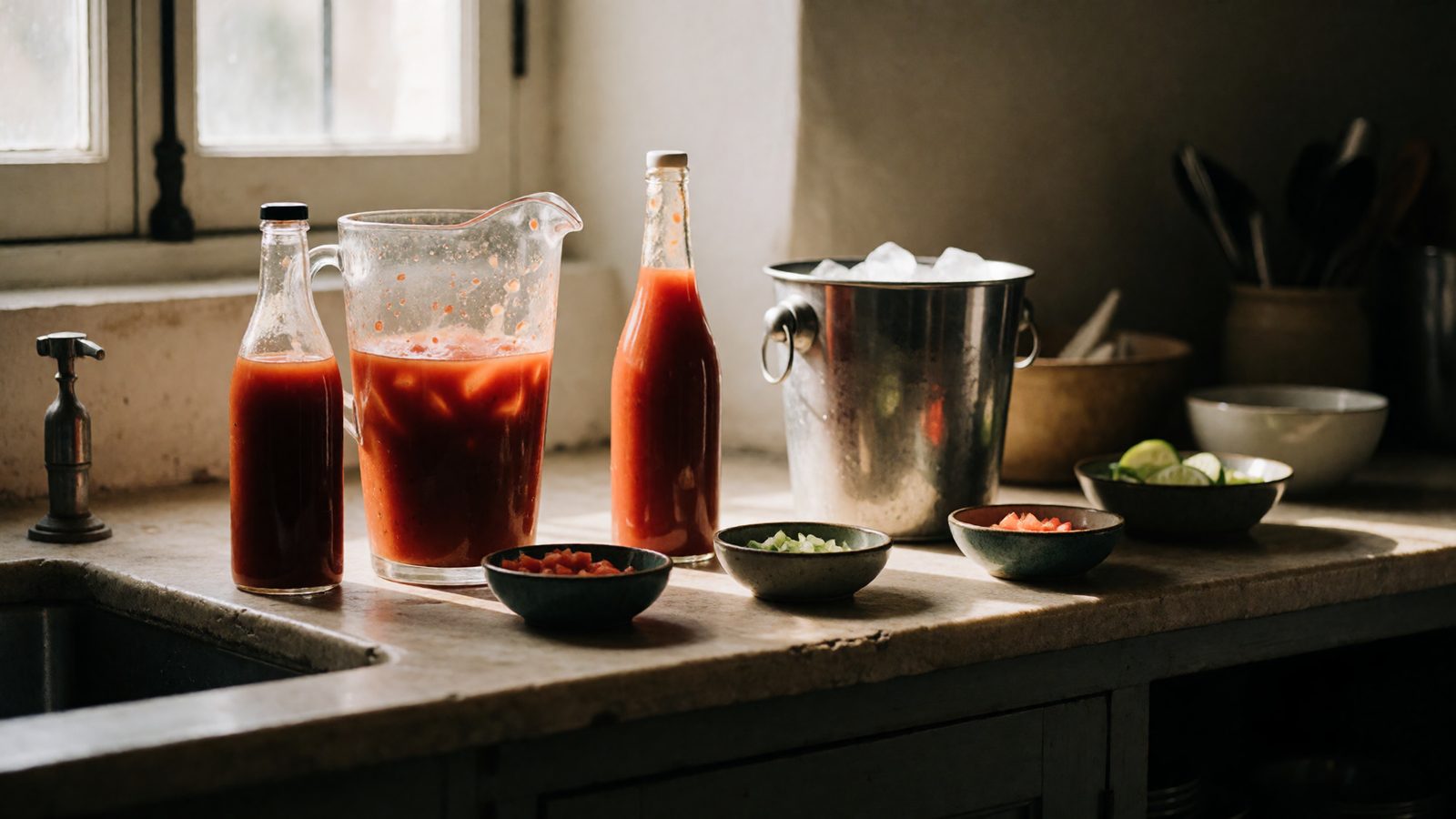
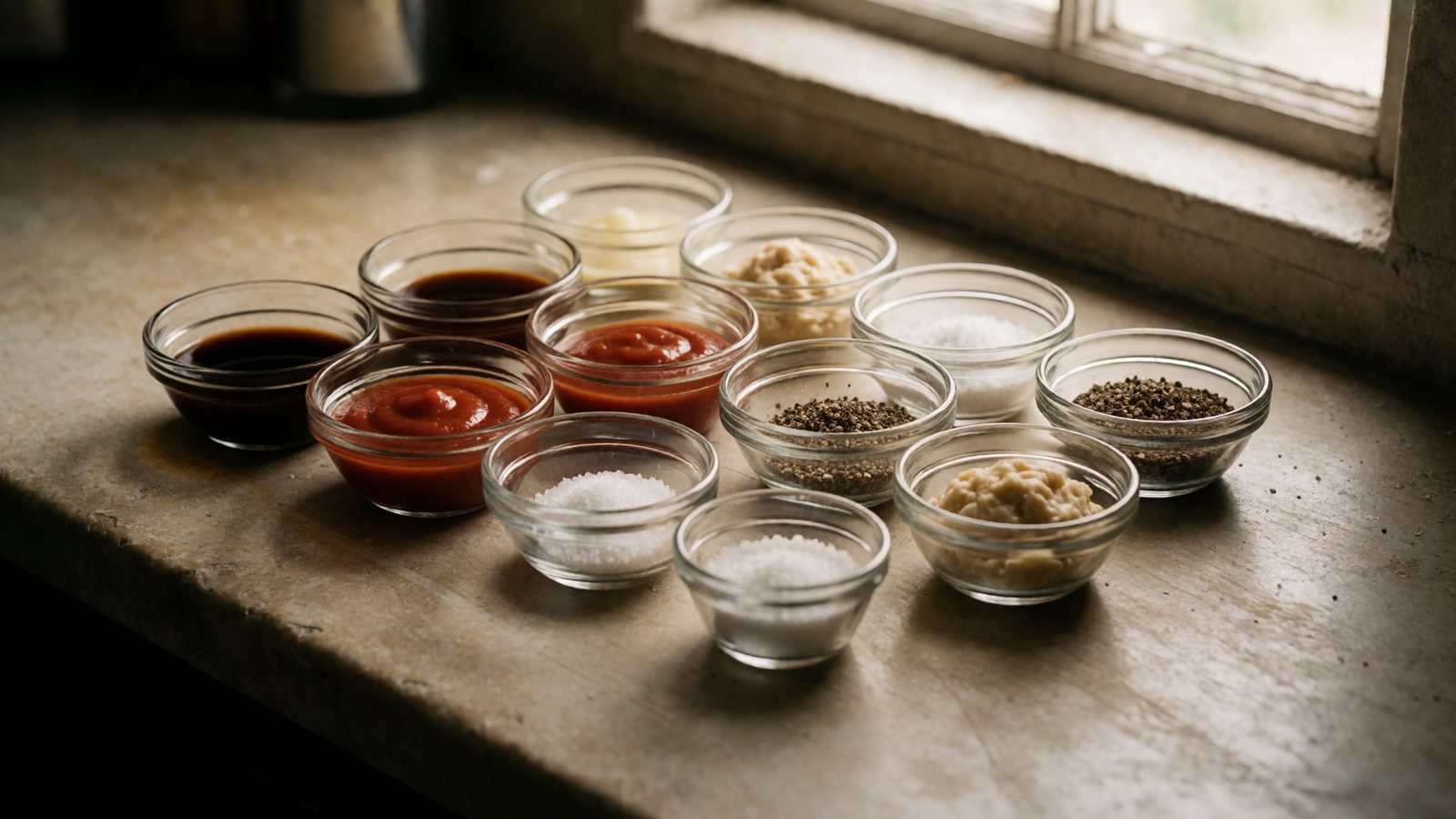
    It is built from a pantry.

    Call it a cocktail if you want. In practice, it behaves more like a cold soup with an attitude.

    It demands:

    Freshness   Real horseradish that clears your sinuses. Citrus squeezed to order. Ingredients that are alive, not preserved.

    Precision   Not measured in ounces alone, but in restraint. A few drops too many of the wrong hot sauce and the entire drink shifts.

    Chemistry   Heat, acid, salt, and umami working together. Worcestershire, spice blends, pepper — each choice changes the outcome.

    Identity   The garnish is not decoration. It is a statement. Whether it is a simple celery stalk or something more ambitious, it reflects exactly who you are at 11:00 AM on a Sunday.

    The best versions do not eliminate choice. They structure it.


    The Survival of the Honest Drink

    The Bloody Mary has outlasted every trend.

    It moved through Prohibition-era improvisation, the aesthetic excess of the 1980s, and the precision-driven mixology movement of the 2010s without losing its core identity.

    Its origin story — Paris or New York — almost doesn’t matter.

    What matters is that it remains one of the few drinks that can function as breakfast, recovery, ritual, and social occasion all at once.

    It is, quite literally, vegetable juice with vodka.

    An honest and slightly absurd sentence that somehow still undersells it.

    And in a market where most beverages have been standardized, it remains one of the few drinks that can still justify a premium through execution alone.


    Our Mission

    We are not here to sell shortcuts.

    We are here because the Bloody Mary deserves the same level of respect we give to regional barbecue or fine wine. It is a drink defined by inputs, technique, and personal preference — not just branding.

    We believe in asking the questions that actually matter:

    Does the vodka matter? Yes. But the tomato matters more.

    Is Clamato an evolution or a departure? That depends on what you value in the drink.

    Where does a garnish end and excess begin? Somewhere between intention and distraction.

    We answer to the drink first. Everything else comes second.

    If we recommend an ingredient or a formula, it is because it has been tested, adjusted, and earned its place.

    The Bloody Mary rewards conviction.

    And we have plenty of it.


    This site is independently operated. We have no brand partnerships, no sponsored content, and no financial relationship with any product we mention. If we recommend something, it’s because it’s good.

    This essay was developed with the assistance of AI and reviewed and approved by the editorial team at bloody-marys.com.

  • The Virgin Mary — Making a Non-Alcoholic Version Worth Drinking

    The Virgin Mary — Making a Non-Alcoholic Version Worth Drinking

    The Virgin Mary gets a bad reputation it doesn’t deserve. Too often it’s treated as an afterthought — the same Bloody Mary mix poured over ice without the vodka, handed to the non-drinker at the table like an apology. That’s not a Virgin Mary. That’s just tomato juice with attitude.

    A genuinely great Virgin Mary requires a different approach, because vodka does more than add alcohol. It adds texture, a slight viscosity, and a clean neutrality that balances the acidity and heat of the mix. When you remove it, something is missing — and just adding more mix doesn’t fix the problem.

    Here’s how I build a Virgin Mary worth drinking.

    First, accept that you’re building a different drink, not a lesser one. The goal isn’t to approximate the alcoholic version. The goal is to create something complex, satisfying, and interesting on its own terms.

    Start with a high-quality no-salt-added tomato juice or — even better — blend your own from ripe tomatoes if you have access to good ones. The base matters more in a Virgin Mary because there’s nothing to hide behind.

    Add a small splash of pickle brine or olive brine for the savory depth that vodka would normally provide. A few drops of apple cider vinegar brightens everything up and adds a complexity that plain tomato juice lacks. A tiny amount of olive oil — and I mean tiny, half a teaspoon per serving — adds the textural body that vodka contributes.

    Season aggressively. Virgin Marys need slightly more spice than their alcoholic counterpart because the alcohol isn’t there to amplify and carry flavor. More horseradish. More pepper. A little more Worcestershire.

    The garnish matters even more in a Virgin Mary — it’s part of the experience in a way that’s especially important when the drink itself is doing all the work without a spirit behind it.

    Done right, a Virgin Mary is not a compromise. It’s a statement.

    A note on this post: I worked with an AI writing tool to help shape and refine some of the language here. The insistence that non-alcoholic drinks deserve as much craft as their counterparts is entirely my own.

  • The Best Bloody Mary Brunch Pairings

    The Best Bloody Mary Brunch Pairings

    A Bloody Mary doesn’t exist in a vacuum. It lives at the brunch table, surrounded by food, and what you pair it with either elevates the whole experience or creates a confusing mess of competing flavors. Let’s talk about what actually works.

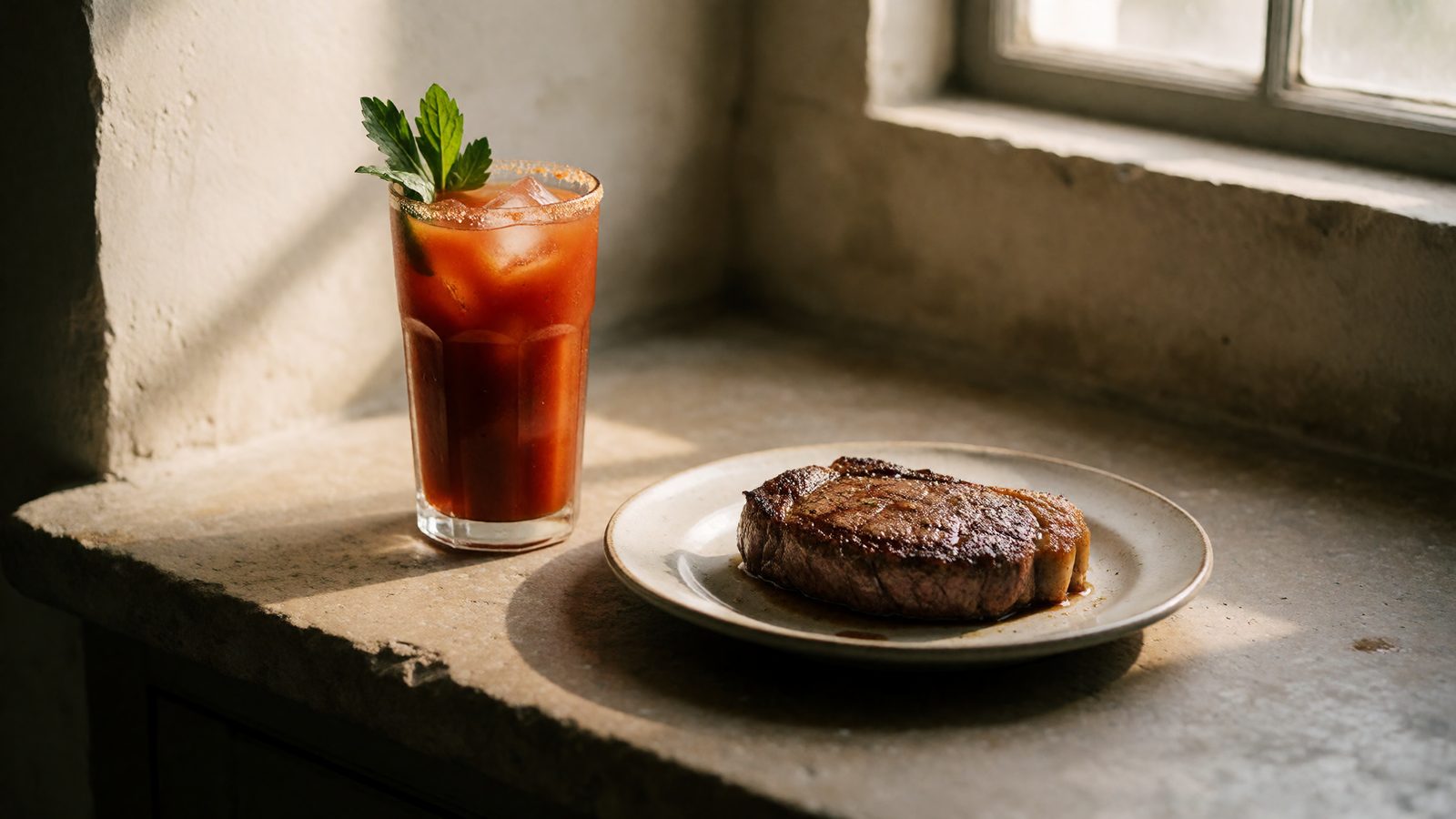
    The classic pairing is eggs, and there’s a reason it’s classic. The richness of egg yolk — in a Benedict, a scramble, a soft poached egg over almost anything — plays perfectly against the acidity and spice of a well-built Bloody Mary. The fat in the egg tames the heat just enough, the acid in the drink cuts through the richness of the yolk, and the two together create a balance that feels intentional even when it’s instinctive.

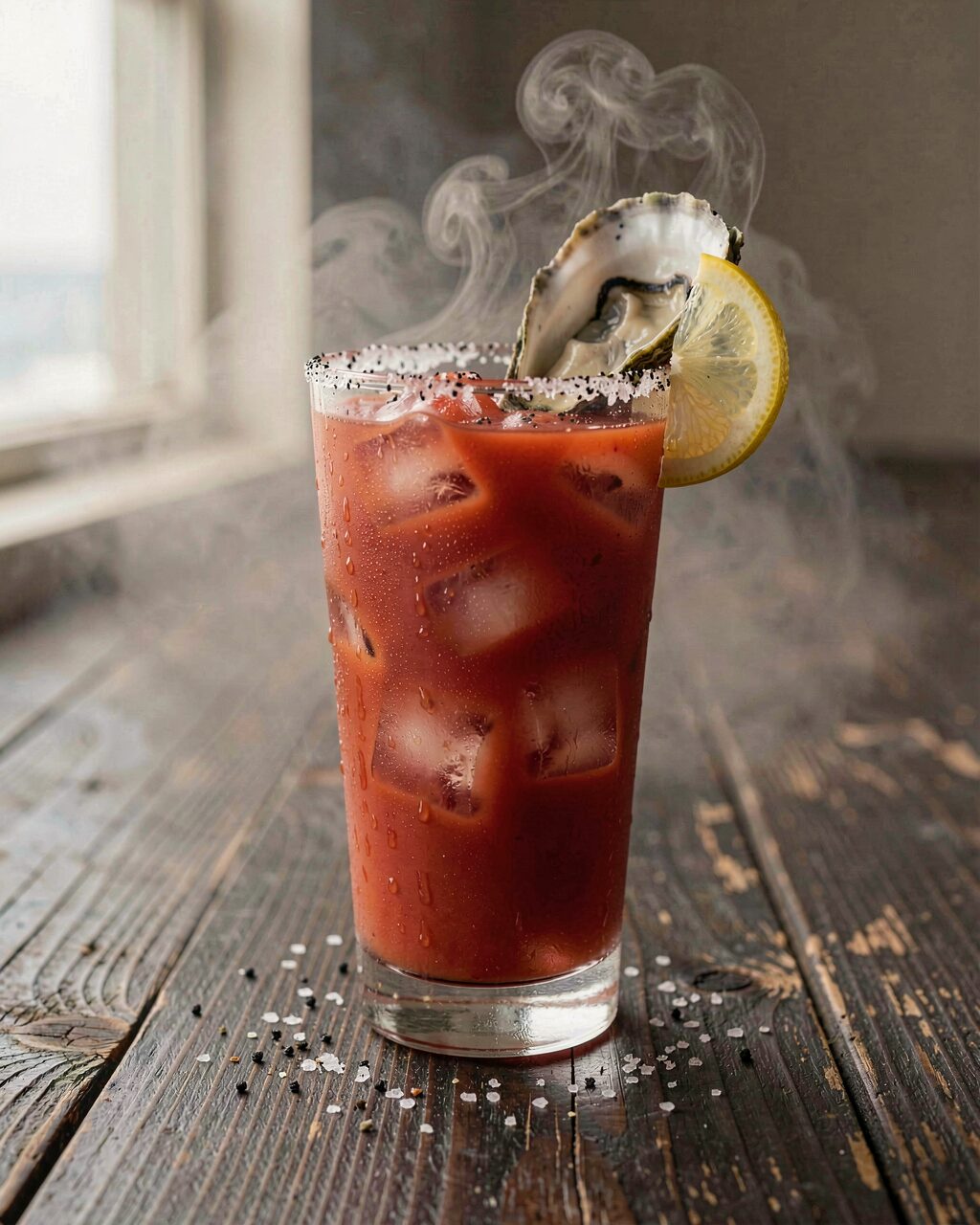
    Oysters are the sophisticated choice. Briny, mineral, slightly sweet — oysters and a Bloody Mary with a smoked salt rim are one of the great combinations in drinking and eating. The oceanic quality of both pulls them together. If you’re serving brunch for people who appreciate food, this is the move.

    Smoked salmon on a toasted bagel with cream cheese hits many of the same notes as oysters — brine, smoke, richness — and is considerably more accessible. The cream cheese softens the heat of the drink. The smoke mirrors the savory depth of a well-seasoned mix.

    Foods that don’t work as well: very sweet things. French toast, syrup-heavy pancakes, fruit-forward dishes. The sweetness clashes with the savory spice profile of the drink in a way that leaves both feeling off. If your brunch spread is sweet-heavy, offer the Bloody Marys as an aperitif before the food rather than alongside it.

    Also worth noting: the Bloody Mary is one of the few cocktails that actually pairs with spicy food. A Nashville hot chicken sandwich alongside a spicy Bloody Mary sounds like it would be too much — it’s actually harmonious. Shared flavor profiles create cohesion rather than competition.

    Eat intentionally. Drink intentionally. The brunch table rewards both.

    A note on this post: I worked with an AI writing tool to help shape and refine some of the language here. The strong opinions about brunch pairings are entirely my own.

  • Heat Levels — From Mild to Mouth-on-Fire

    Heat Levels — From Mild to Mouth-on-Fire

    One of the most personal things about a Bloody Mary is heat. What reads as pleasantly spicy to one person is completely undrinkable to another. Getting heat right — and being able to control it — is one of the essential skills of building a great Bloody Mary.

    Let’s talk about the spectrum.

    At the mild end, you’re working with black pepper, a restrained amount of Worcestershire, and maybe a few drops of a mild hot sauce. The drink has warmth but no burn. It’s approachable for guests who don’t do spicy food. It lets the tomato base and the other flavors come forward without interference. There’s nothing wrong with a mild Bloody Mary built with intention.

    The middle of the spectrum is where most great Bloody Marys live. This is where prepared horseradish becomes essential — it adds sinus-clearing heat that’s different from pepper heat, more immediate and upfront, fading quickly rather than building. Aleppo pepper adds complexity and slow warmth. A quality hot sauce with real pepper flavor rather than just vinegar and salt brings brightness and depth. This is the range where the drink is genuinely exciting.

    At the high end, you’re into jalapeño, habanero, ghost pepper territory. Pickled jalapeño juice adds heat with acid. Fresh jalapeño slices muddled into the mix add green, grassy heat. Chipotle in adobo adds smoky, deep, building heat that sneaks up on you. These elements aren’t for everyone, but in the right hands and the right proportions they produce a Bloody Mary that is genuinely memorable.

    A few rules regardless of where you land on the spectrum: layer your heat from multiple sources rather than just dumping in one hot sauce. Build gradually and taste as you go. And remember that heat intensifies as a batch sits — what tastes right Friday night might be considerably hotter by Sunday morning.

    Control your heat. Don’t let it control you.

    A note on this post: I worked with an AI writing tool to help shape and refine some of the language here. The enthusiasm for layered heat is entirely my own.

  • The History of the Bloody Mary — Myth, Mystery, and a Lot of Vodka

    The History of the Bloody Mary — Myth, Mystery, and a Lot of Vodka

    Few cocktails have a more contested origin story than the Bloody Mary. Almost everything about its history is disputed — who invented it, where, when, and who it was named after. What isn’t disputed is that it became one of the most iconic drinks in the world, and that it earned that status.

    The most widely cited origin story places the creation at Harry’s New York Bar in Paris in the 1920s, attributed to a bartender named Fernand Petiot. The story goes that Petiot combined equal parts vodka and tomato juice — both relatively new to the cocktail world at the time — and called it a Bloody Mary, supposedly after Mary Tudor, the sixteenth-century English queen whose persecution of Protestants earned her the nickname.

    Petiot later brought the drink to the King Cole Bar at the St. Regis Hotel in New York, where he refined it into something closer to what we recognize today — adding spice, Worcestershire sauce, lemon, salt, and pepper. The hotel, apparently squeamish about the name, briefly renamed it the Red Snapper. It didn’t stick.

    There are competing claims. George Jessel, an American entertainer, claimed he invented the drink in the 1940s. Ernest Hemingway reportedly had his own version. Luminaries of the mid-century cocktail world all seem to have had a hand in it at some point.

    What’s clear is that the Bloody Mary found its true cultural home at brunch, where its reputation as a hangover cure — medically dubious but psychologically powerful — made it the unofficial drink of Sunday morning recovery everywhere from Manhattan to Los Angeles.

    The drink has evolved enormously since Petiot’s Paris days. The garnish arms race, the regional variations, the craft mix movement — all of it built on that original, improbable combination of vodka and tomato juice in a Paris bar a century ago.

    Not bad for a drink nobody can quite agree on.

    A note on this post: I worked with an AI writing tool to help shape and refine some of the language here. The fascination with cocktail history is entirely my own.

  • Building the Perfect Bloody Mary — The Order of Operations

    Building the Perfect Bloody Mary — The Order of Operations

    How you build a Bloody Mary matters. The sequence isn’t arbitrary — it affects integration, balance, and the final taste of the drink. Here’s how I do it, and why.

    Start with your ice. Always. You want the glass cold before anything else goes in. Cold glass, cold drink, cold everything. Warm Bloody Marys are a crime.

    Next, your vodka. Two ounces, measured. Not free-poured, measured. Two ounces is the right amount — enough to be present, not so much that it overwhelms the mix. Pour it over the ice so it begins to chill immediately.

    Now your mix. Pour it over the vodka and ice and let it integrate naturally. Don’t stir yet.

    A squeeze of fresh lemon juice goes in next — not lime, lemon. The acid is brighter and works better with tomato. Then your Worcestershire and hot sauce if you’re adding them individually rather than building them into your mix.

    Now stir — gently, with a long spoon, from the bottom up. You’re integrating, not aerating. A Bloody Mary is not a cocktail you shake. Shaking introduces air, changes the texture, and makes it foamy. Nobody wants a foamy Bloody Mary.

    Taste before you garnish. Always taste. Adjust if needed — more hot sauce, another squeeze of lemon, a pinch of pepper. The garnish goes on last, after you’ve confirmed the drink is right.

    One more thing: never build a Bloody Mary in the same glass you’re going to drink it from if you’re making them for guests. Use a mixing vessel, build and taste there, then pour into the rimmed serving glass. It’s cleaner, more consistent, and it gives you quality control before the drink hits the table.

    Details matter. The order of operations is a detail.

    A note on this post: I worked with an AI writing tool to help shape and refine some of the language here. The insistence on proper technique is entirely my own.

  • Tomato Juice vs. Clamato — The Great Debate

    Tomato Juice vs. Clamato — The Great Debate

    This is one of those conversations that divides Bloody Mary people straight down the middle, and I’m not here to end the debate. I’m here to give you the information to make an intelligent choice.

    Clamato, for the uninitiated, is tomato juice blended with clam broth. It’s been around since 1966, it’s enormously popular in Canada and Mexico, and it is the base for the Caesar — Canada’s national cocktail and, in my opinion, one of the most underrated drinks in North America.

    Here’s what Clamato does that plain tomato juice doesn’t: it adds a briny, oceanic umami depth that makes the drink taste more complex right out of the gate. The clam broth is subtle — you’re not drinking a seafood cocktail — but it rounds out the savory qualities of the drink in a way that’s genuinely hard to replicate with plain tomato juice alone.

    What plain tomato juice does better: it’s a cleaner canvas. The flavor is purely tomato, which means your spices, your heat, and your other ingredients have room to express themselves without competition. And critically — for those watching sodium — you can find no-salt-added tomato juice. No-salt-added Clamato does not exist. Regular Clamato is loaded with sodium.

    My take: if you’re building a mix from scratch and controlling every ingredient, start with no-salt-added tomato juice. You have more control, less sodium, and a cleaner flavor foundation. If you want the complexity of Clamato, add a small amount of clam juice separately — you can find it in small bottles — and control exactly how much brine goes into your mix.

    If sodium isn’t a concern and you want a richer, more complex base without doing any work, Clamato is a legitimate shortcut. Just go in knowing what you’re getting.

    Both have a place. Neither is wrong. But only one of them lets you truly own what’s in your glass.

    A note on this post: I worked with an AI writing tool to help shape and refine some of the language here. The nuanced position on the Clamato question is entirely my own.

  • Celery Salt vs. Smoked Salt — Which Rim Is Right?

    Celery Salt vs. Smoked Salt — Which Rim Is Right?

    The rim is the first thing your lips touch before you take a sip. It sets the tone for everything that follows. Getting it right matters more than most people realize.

    The classic choice is celery salt, and there’s a reason it’s been the standard for decades. Celery salt has a savory, slightly vegetal quality that signals Bloody Mary before the drink even hits your tongue. It’s familiar. It works. There’s nothing wrong with it.

    But smoked salt is worth serious consideration, especially if your mix leans toward the bold and spicy side.

    Smoked salt — whether it’s applewood, hickory, or alderwood smoked — brings an entirely different dimension to the rim. It’s deeper, more complex, with a campfire quality that plays beautifully against the acidity of tomato and the heat of pepper. If your Bloody Mary has chipotle or adobo in it, a smoked salt rim is a natural extension of those flavors. It ties the whole drink together.

    A few other rim options worth experimenting with:

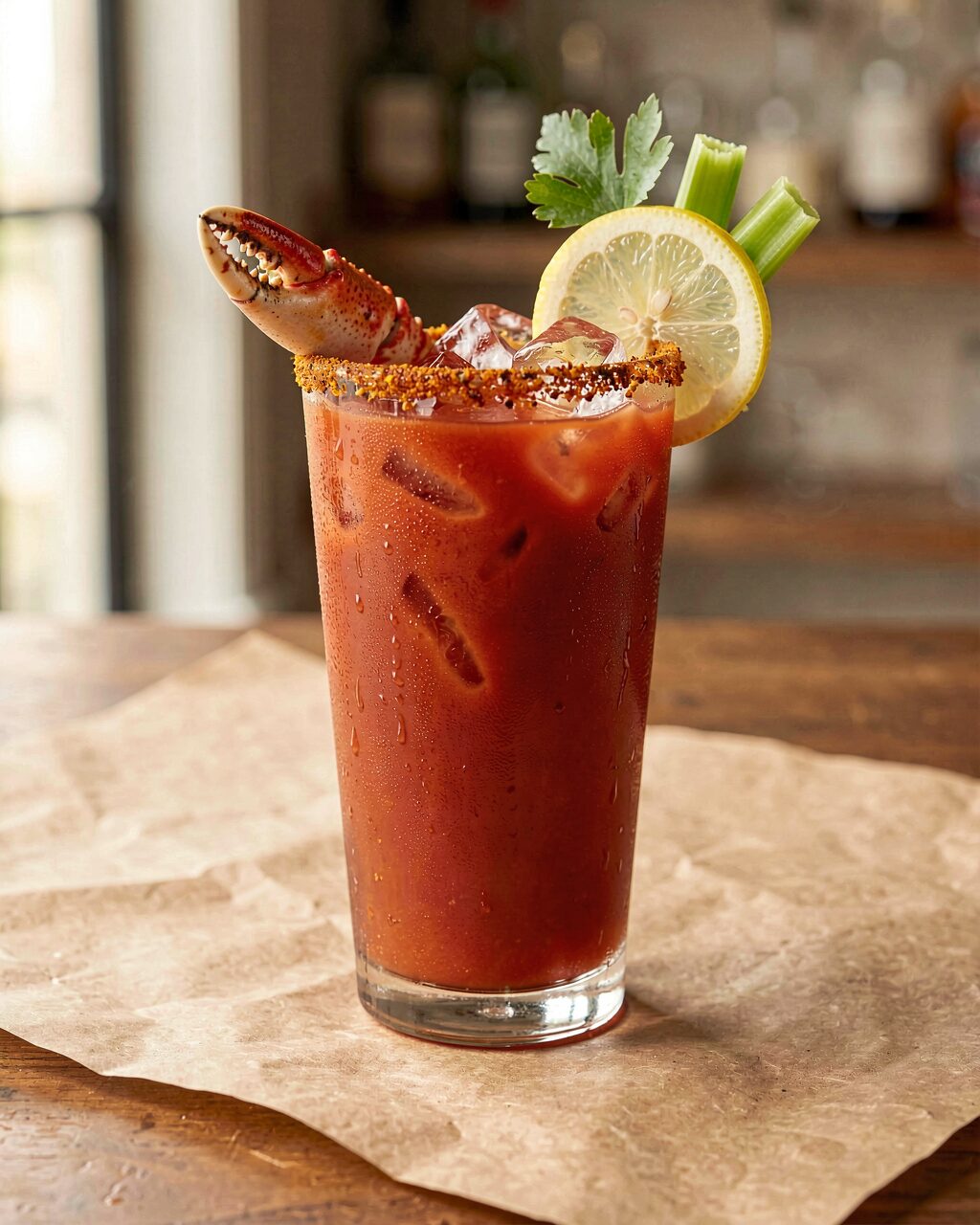
    Old Bay seasoning mixed with celery salt is a classic on the East Coast and brings a crab-shack energy that works surprisingly well. Tajín — the Mexican chili-lime seasoning — is bright, acidic, and spicy, and makes a particularly good rim if your mix skews citrus-forward. Aleppo pepper blended with coarse sea salt gives you heat with complexity and a beautiful deep red color on the glass.

    My recommendation: keep two rimming blends on hand. A classic celery salt for purists and guests who want the traditional experience, and a smoked salt or Aleppo blend for the adventurous. Let people choose.

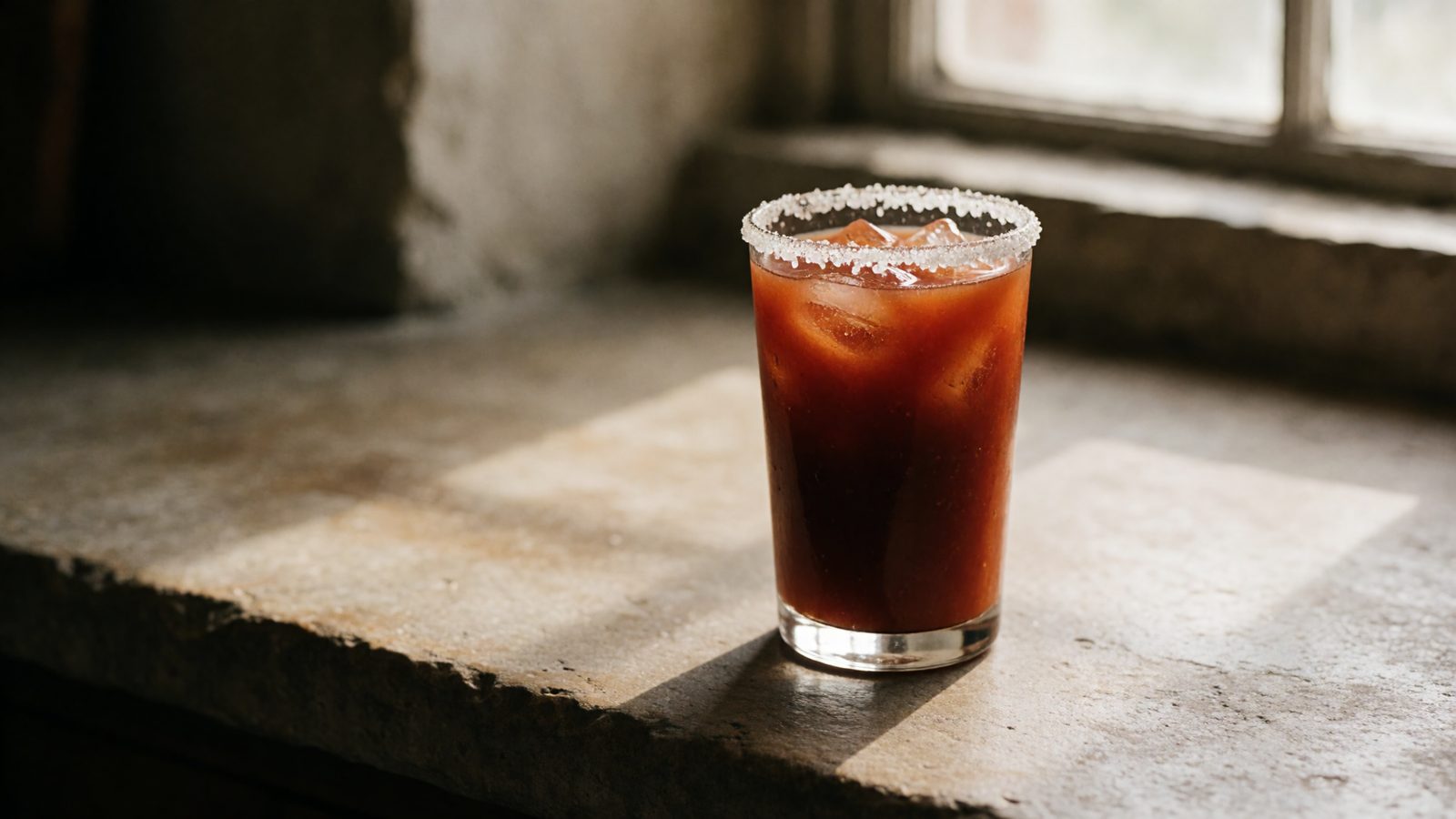
    And whatever you use — apply it properly. Wet the rim with a lemon or lime wedge, dip it cleanly into a shallow dish of your blend, and let it set for a minute before pouring. A rim that slides off into the drink is a rimming failure.

    A note on this post: I worked with an AI writing tool to help shape and refine some of the language here. The opinions on rim technique are entirely my own.

  • The Perfect Bloody Mary Garnish — How Far Is Too Far?

    The Perfect Bloody Mary Garnish — How Far Is Too Far?

    Somewhere along the way, the Bloody Mary garnish went completely off the rails. And I have thoughts about it.

    What started as a celery stalk and maybe a lime wedge has evolved — if that’s even the right word — into a full architectural project. Cheeseburger skewers. Fried chicken. Entire lobster tails. Sliders balanced on the rim. I’ve seen a Bloody Mary served with a whole slice of pizza draped over the glass. There are bars charging $25 for a drink that is essentially a cocktail with a buffet attached.

    I understand the appeal. It’s visual. It’s shareable. It photographs well and gets posted online and drives traffic to the bar that served it. From a marketing standpoint, the loaded Bloody Mary tower is genuinely brilliant.

    From a drinking standpoint, it’s a mess.

    Here’s my position: the garnish should complement the drink, not compete with it. A great Bloody Mary is already complex — you’ve got acid, heat, umami, smoke, spice, and brine all working together in the glass. The garnish is the finishing touch, not the main event.

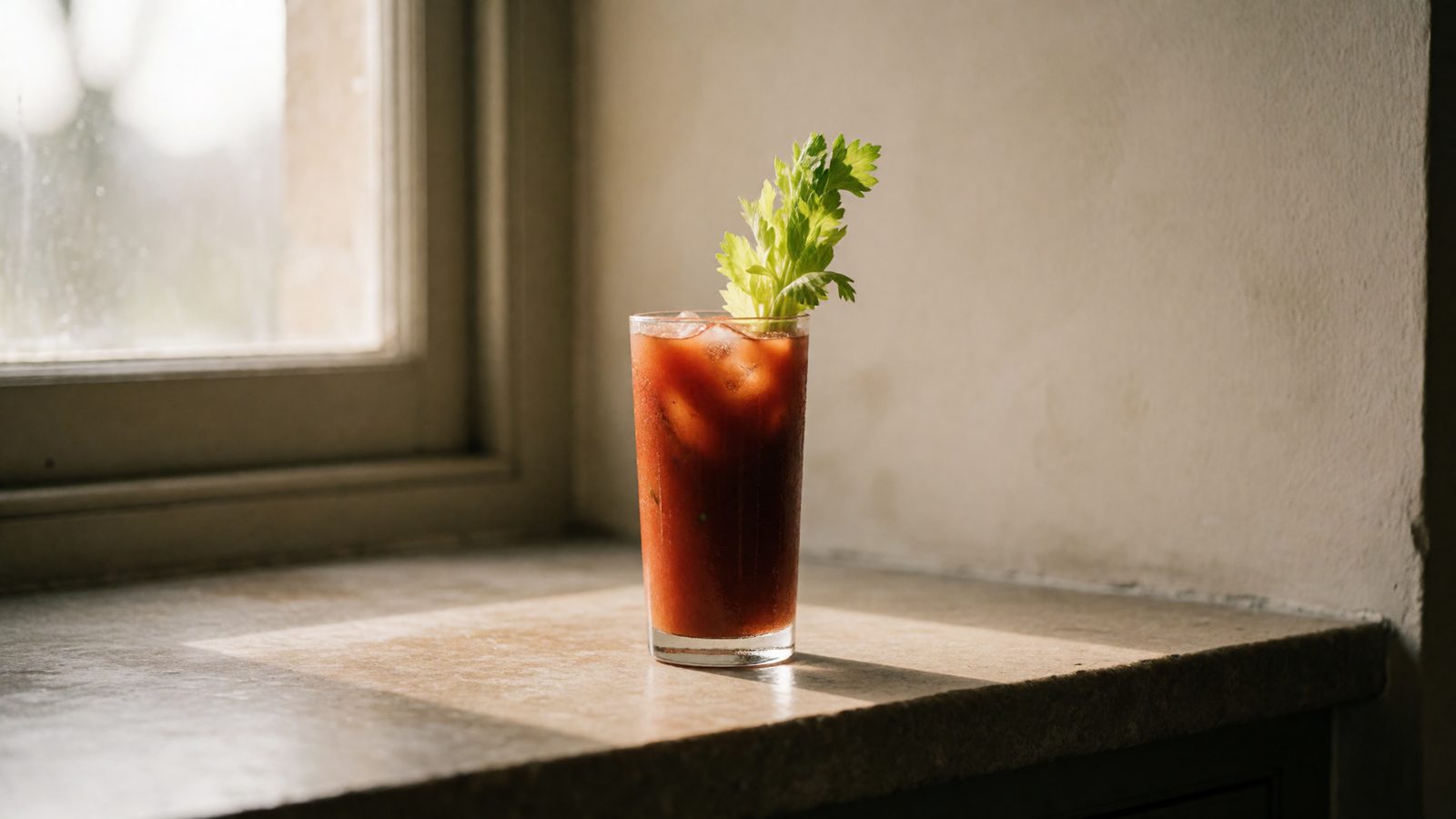
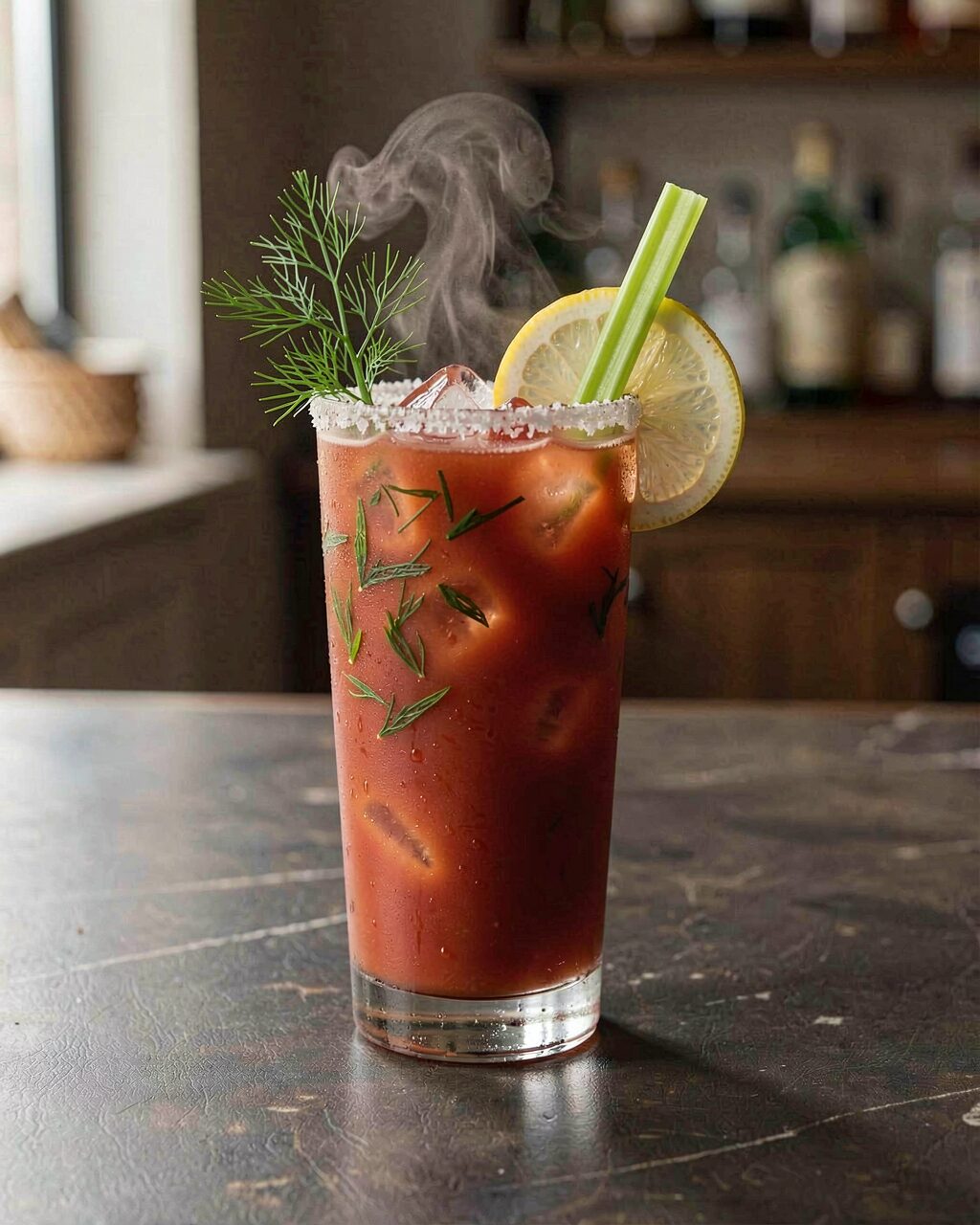
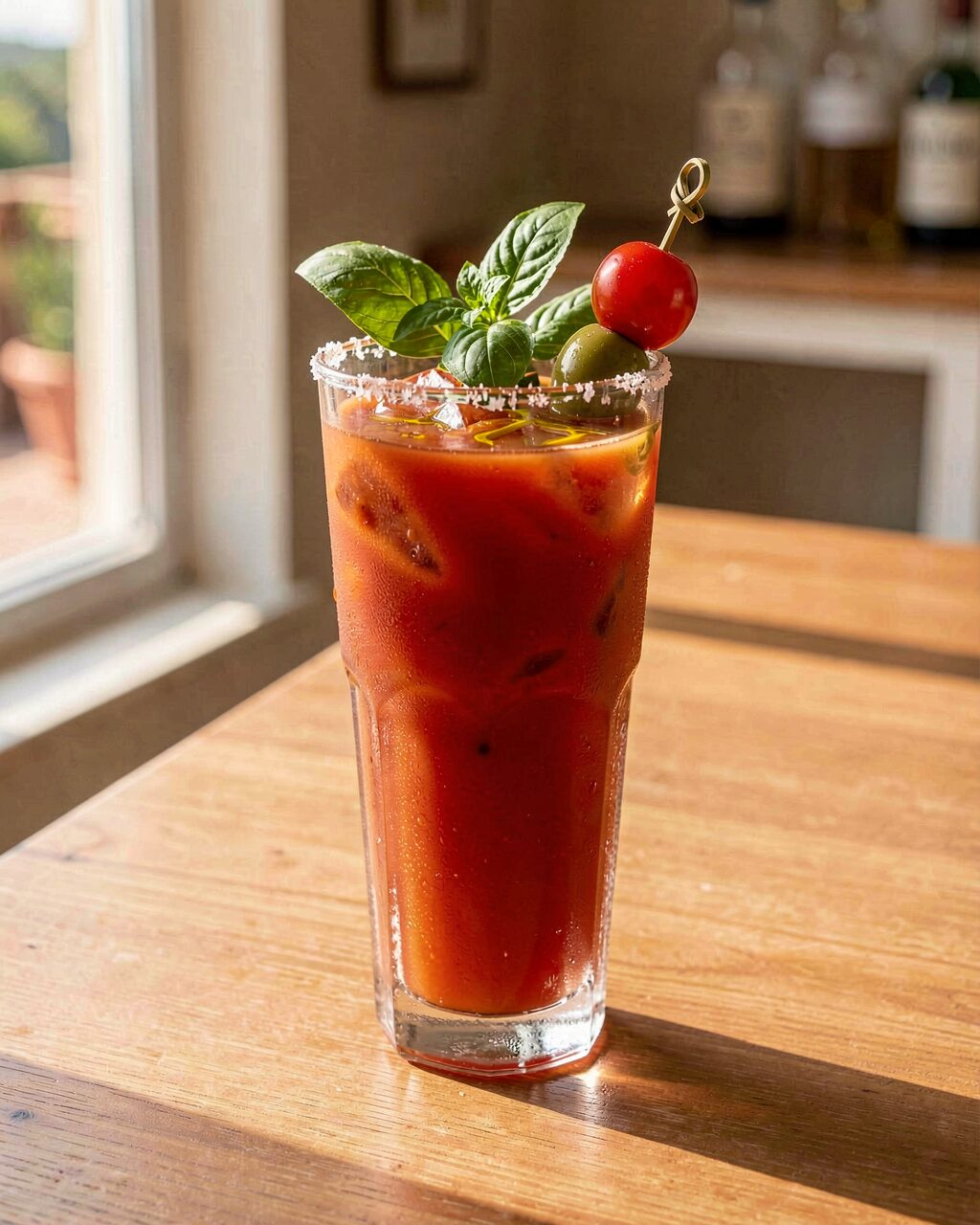
    My ideal garnish: a crisp celery stalk for aroma and crunch, a skewer of two or three good green olives, a slim slice of cucumber, maybe a pickled green bean or pepperoncini, and a wedge of lemon rather than lime for a slightly different acid note. Clean. Intentional. Everything on that glass has a reason to be there.

    And remember — as we’ve covered before — every garnish brings sodium. Olives, cured meats, pickles, bacon. If you’re watching your salt intake, the garnish tower isn’t your friend.

    Make it beautiful. Make it intentional. Just don’t make it a meal.

    A note on this post: I worked with an AI writing tool to help shape and refine some of the language here. The strong opinions about garnish restraint are entirely my own.

  • Dry Sherry — The Bartender’s Best Kept Secret

    Dry Sherry — The Bartender’s Best Kept Secret

    Most people have never considered putting dry sherry in a Bloody Mary. Those people are missing out.

    I discovered this by accident, the way most good bartending discoveries happen — experimenting late on a Sunday when the usual suspects weren’t delivering what I wanted. I had a bottle of dry fino sherry on the counter, added a splash to a test batch, and immediately understood why some of the best bar programs in the country quietly use it.

    Here’s what sherry does that nothing else does: it adds a dry, nutty, slightly oxidized depth that you simply cannot replicate with any other ingredient. It’s savory without being salty. It’s complex without being weird. And because it’s only about 15% alcohol, it doesn’t destabilize your drink the way adding more vodka would.

    Fino or manzanilla sherry are your best options — both are bone dry, light-bodied, and have a briny, almost oceanic quality that plays beautifully with the tomato base and heat of a well-built Bloody Mary. Amontillado works too if you want something slightly richer and nuttier.

    The amount matters. You’re not replacing your vodka — you’re supplementing your mix. I use about an ounce per serving, added directly to the mix rather than the glass. It integrates better that way and gives it time to mellow into everything else.

    A word of warning: don’t use cream sherry or sweet sherry. That’s a completely different product and it will make your Bloody Mary taste like a dessert went wrong. Dry. Always dry.

    If you’ve been making the same Bloody Mary for years and wonder why it feels like it’s missing something, try a splash of fino sherry. It might be exactly what you’ve been looking for.

    A note on this post: I worked with an AI writing tool to help shape and refine some of the language here. The enthusiasm for obscure cocktail ingredients is entirely my own.