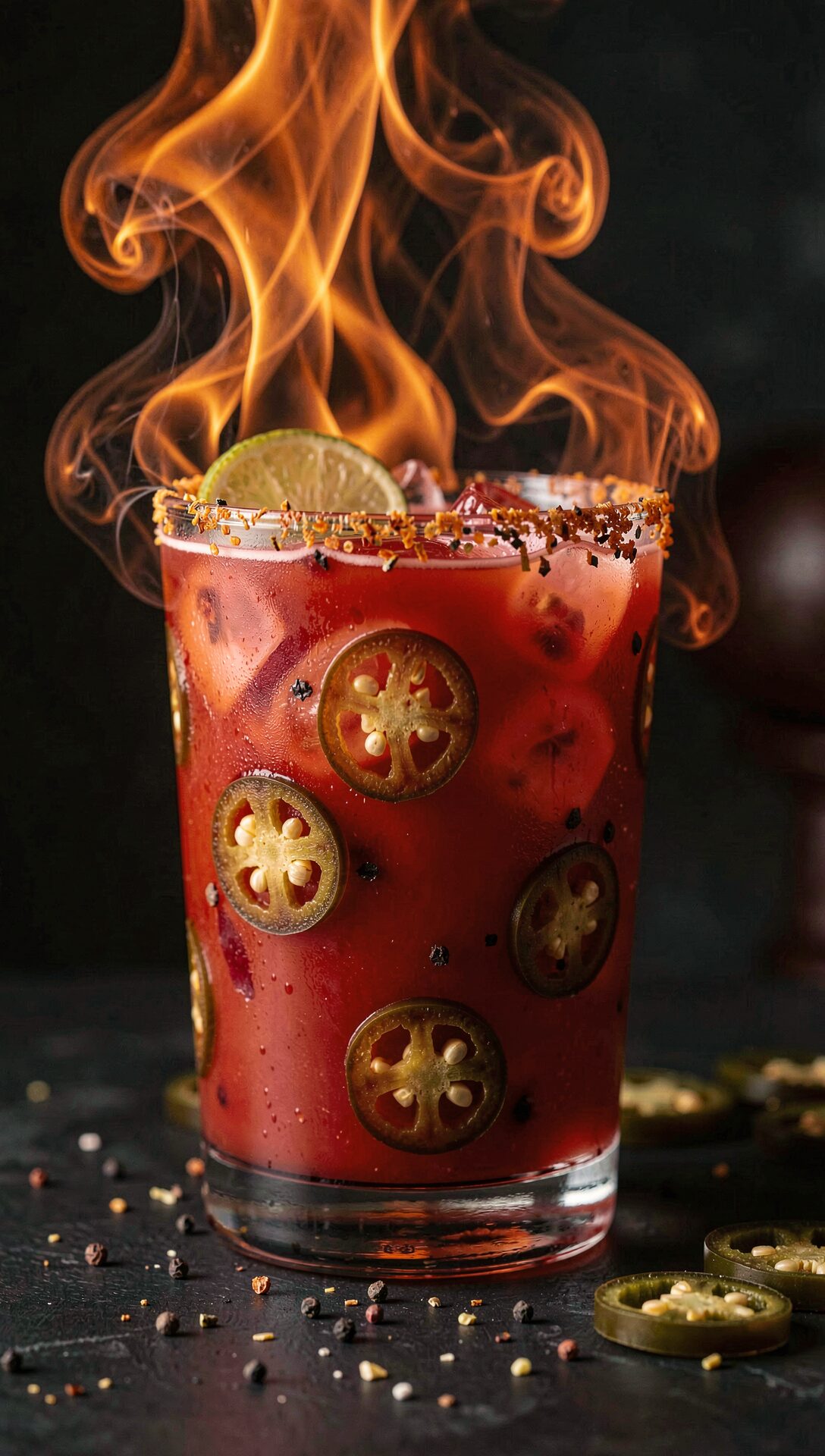
One of the most personal things about a Bloody Mary is heat. What reads as pleasantly spicy to one person is completely undrinkable to another. Getting heat right — and being able to control it — is one of the essential skills of building a great Bloody Mary.
Let’s talk about the spectrum.
At the mild end, you’re working with black pepper, a restrained amount of Worcestershire, and maybe a few drops of a mild hot sauce. The drink has warmth but no burn. It’s approachable for guests who don’t do spicy food. It lets the tomato base and the other flavors come forward without interference. There’s nothing wrong with a mild Bloody Mary built with intention.
The middle of the spectrum is where most great Bloody Marys live. This is where prepared horseradish becomes essential — it adds sinus-clearing heat that’s different from pepper heat, more immediate and upfront, fading quickly rather than building. Aleppo pepper adds complexity and slow warmth. A quality hot sauce with real pepper flavor rather than just vinegar and salt brings brightness and depth. This is the range where the drink is genuinely exciting.
At the high end, you’re into jalapeño, habanero, ghost pepper territory. Pickled jalapeño juice adds heat with acid. Fresh jalapeño slices muddled into the mix add green, grassy heat. Chipotle in adobo adds smoky, deep, building heat that sneaks up on you. These elements aren’t for everyone, but in the right hands and the right proportions they produce a Bloody Mary that is genuinely memorable.
A few rules regardless of where you land on the spectrum: layer your heat from multiple sources rather than just dumping in one hot sauce. Build gradually and taste as you go. And remember that heat intensifies as a batch sits — what tastes right Friday night might be considerably hotter by Sunday morning.
Control your heat. Don’t let it control you.
A note on this post: I worked with an AI writing tool to help shape and refine some of the language here. The enthusiasm for layered heat is entirely my own.
Leave a Reply