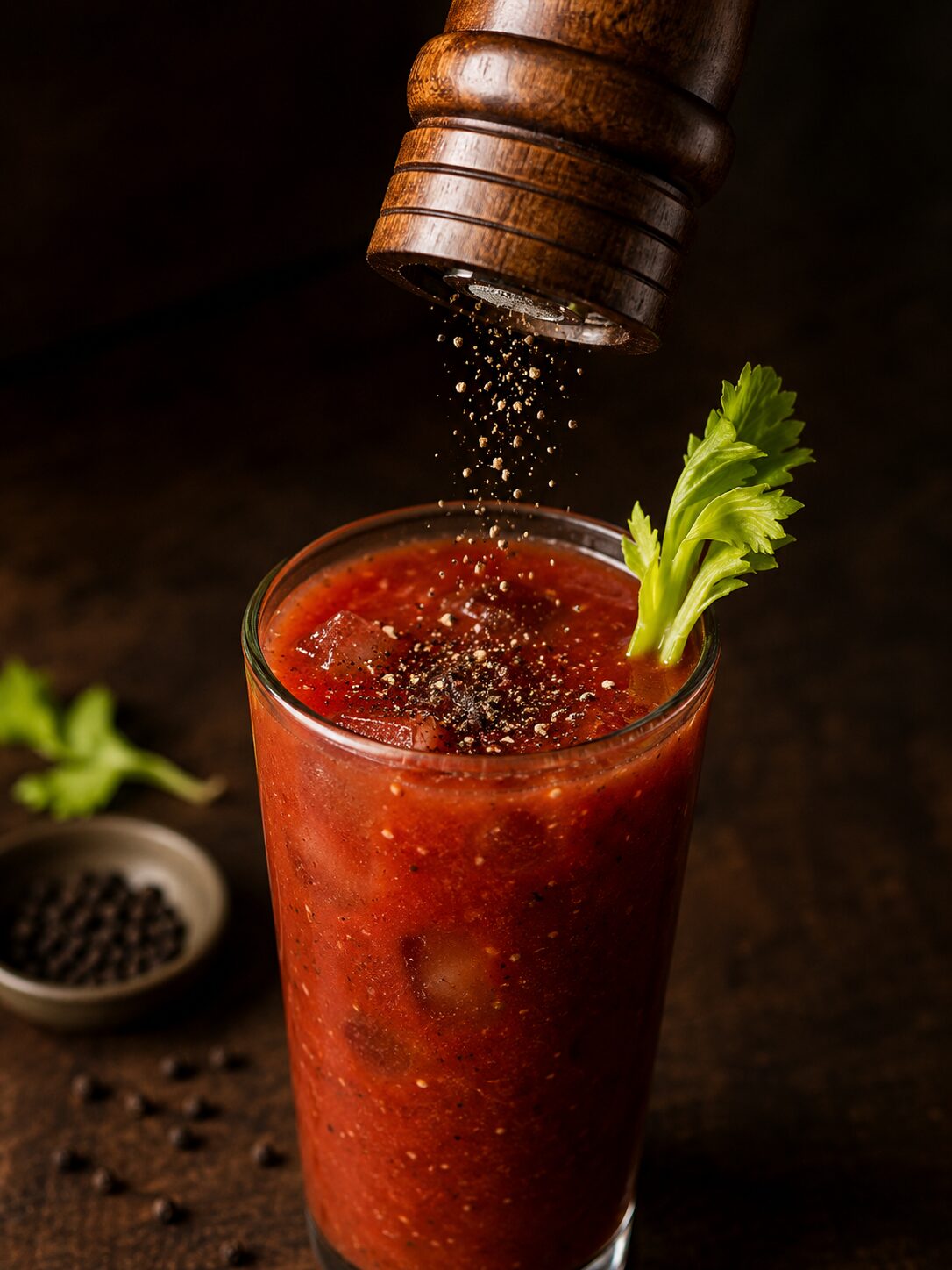
Garlic appears in almost every Bloody Mary recipe in some form — and almost no recipe explains which form. The differences between fresh, powdered, salted, and infused garlic are bigger than they sound, and they matter more than the average home bartender realizes.
This is the breakdown nobody writes.
A quick bit of chemistry
Garlic’s flavor is allicin — a sulfur compound that doesn’t exist in the whole clove. Allicin is created the moment garlic is crushed, cut, or grated, when an enzyme called alliinase converts alliin (which is in the intact clove) into allicin (which carries all the flavor and aroma).
This is why a whole peeled garlic clove smells mild but a grated one knocks you backward.
Allicin behaves very differently across forms:
- Heat destroys it. This is why roasted garlic tastes so different from raw garlic.
- Acid preserves it. Which is why garlic in pickles and salsas holds its flavor.
- Drying transforms it into milder thiosulfinates that are gentler but more stable.
- Oxygen slowly degrades it. Fresh-crushed garlic peaks within minutes and fades over hours.
Each form of garlic delivers a different version of the same underlying molecule. The form matters.
Fresh garlic, crushed
The most assertive option. Also the most polarizing.
A single grated clove per 80 oz pitcher adds sharp, pungent garlic flavor that’s unmistakable on the first sip. It fades within thirty minutes as the allicin oxidizes in the acid environment of the tomato juice, but during that window it dominates the drink.
Useful in single-drink builds you’ll drink immediately. Problematic in pitcher recipes that sit, because the flavor profile shifts as the allicin breaks down — what you tasted right after mixing isn’t what your guests will taste an hour later.
Grate the clove on a microplane, never chop. Microplaning ruptures more cell walls and releases dramatically more allicin than knife-chopping. The difference is visible — finely chopped garlic in a Bloody Mary settles to the bottom of the glass as small chunks; microplaned garlic dissolves into the drink.
Garlic powder
The most consistent option. Almost universally underrated by people who think “fresh is always better.” For a Bloody Mary, garlic powder is often the right call.
The dehydration process breaks down allicin into milder thiosulfinates that play better with cold drinks. Half a teaspoon per 80 oz pitcher delivers warm, rounded garlic flavor that holds across days. The drink you batch on Saturday morning will taste the same on Sunday afternoon — which fresh garlic can’t promise.
Recipe writers default to garlic powder for a reason. It’s not laziness. It’s chemistry.
Best brands: Penzey’s, Frontier Co-op, and Spice Islands. Avoid the cheapest supermarket-aisle garlic powder, where the volatile compounds have often degraded before the jar reaches the shelf.
Garlic salt
Salt with 25-30% garlic powder by volume. Convenient. Problematic for Bloody Marys because it’s mostly salt — which means you can’t dose the garlic without over-dosing the salt.
Skip it. The savings of having one jar instead of two aren’t worth the loss of control over both ingredients.
Use celery salt and garlic powder separately. You’ll get a better drink and your salt levels will stay where you want them.
Garlic-infused vodka — the connoisseur move
This is the upgrade that takes a Bloody Mary from competent to memorable.
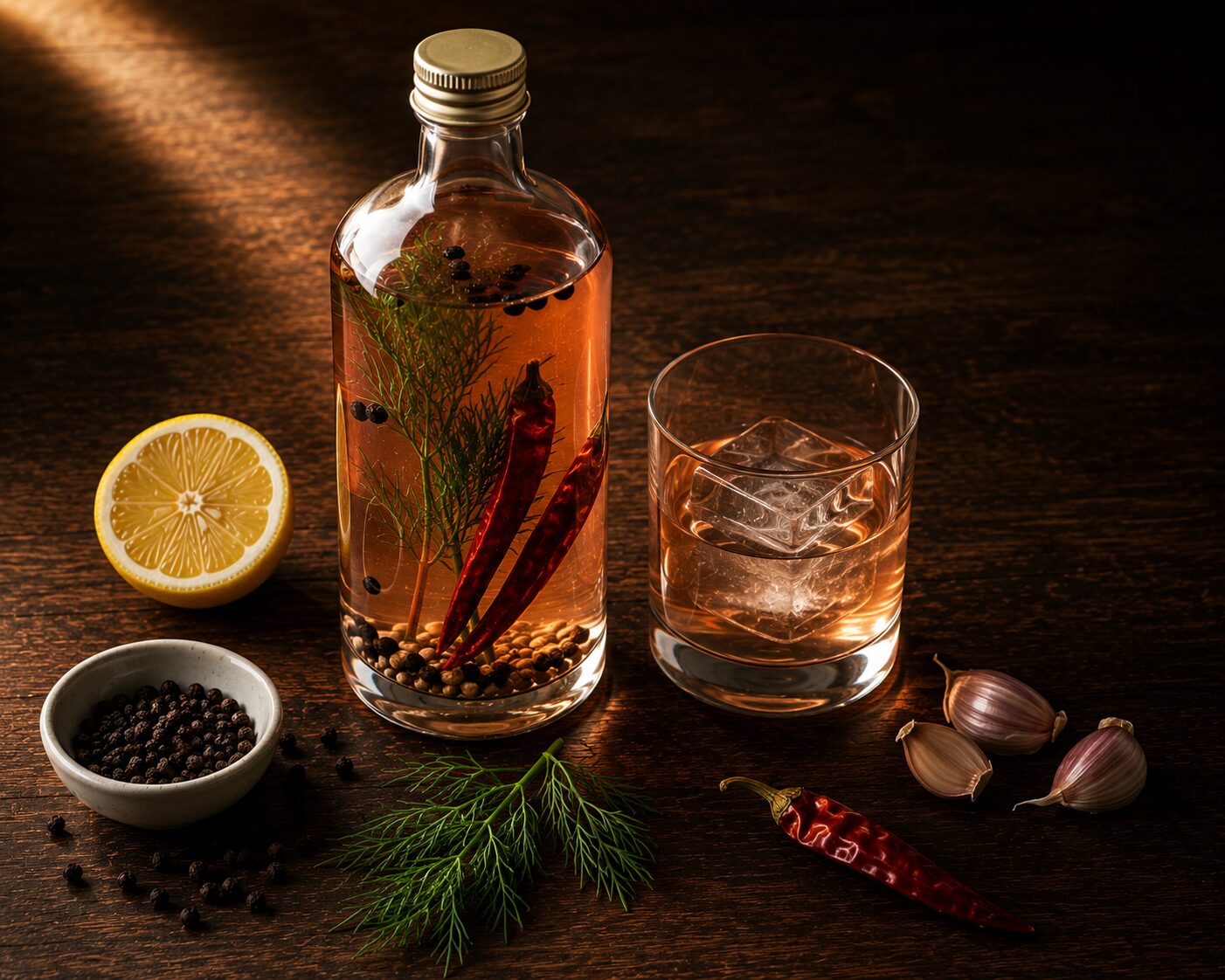
Steep four to six peeled garlic cloves in a 750ml bottle of clean vodka for 24 to 48 hours. No longer than 48 — past that, the flavor turns sharply harsh. Strain through a fine-mesh strainer back into the bottle and discard the cloves.
The result tastes like vodka with a soft garlic finish, not garlic-flavored vodka. The distinction matters — garlic vodka would dominate the drink; garlic-finished vodka contributes warmth that runs through every sip without ever announcing itself.
Substitute one ounce of garlic vodka for one ounce of regular vodka in a standard Bloody Mary build. You’ll get savory depth that no other form of garlic delivers, integrated into the alcohol itself rather than sitting on top of the drink.
Roasted garlic puree — the dark horse
The form most upscale brunch spots actually use, and the one home cooks rarely consider.
Roast a head of garlic at 400°F for about 40 minutes (cut the top off, drizzle with olive oil, wrap in foil). When cool, squeeze the soft cloves out and mash with a fork. Stays in the fridge a week.
A single teaspoon per 80 oz pitcher contributes sweetness, depth, and a mellow caramelized note that no other form of garlic can deliver. Roasting destroys the sharp allicin and develops Maillard reactions that create entirely new flavor compounds — the same chemistry that makes browned butter taste so different from melted butter.
If you’ve ever had a Bloody Mary at a serious restaurant brunch and wondered what made it taste richer than your home version, roasted garlic puree is often part of the answer.
The “too much garlic” problem
Garlic overpowers tomato in a way that’s hard to dial back once you’ve crossed the line.
Past about two cloves’ worth of garlic per 80 oz pitcher (in any form), the drink stops tasting like a Bloody Mary and starts tasting like savory tomato-garlic juice. There’s a threshold, it’s lower than most people think, and crossing it is one of the most common Bloody Mary mistakes.
Approximate equivalences for “two cloves’ worth”:
- 2 medium fresh cloves, grated
- ½ teaspoon garlic powder
- 1 teaspoon roasted garlic puree
- 2 oz garlic-infused vodka in the build
Stay under these and the garlic supports the drink. Exceed them and the garlic is the drink.
A useful combination
Fresh garlic in the mix (½ clove grated per pitcher) plus a tiny pinch of garlic powder mixed into the celery salt rim.
The fresh contributes the bright top note you taste first. The powder contributes the rounded background warmth that holds through the entire glass. Together they layer in a way that neither form delivers alone.
This is the trick that competition-grade home bartenders use without writing it down.
A note on social consequences
If you’re drinking these at brunch with other people, the dried and powdered forms of garlic are dramatically more socially survivable than fresh. Fresh garlic carries allicin into your breath for hours. Dried garlic powder, having lost most of its volatile sulfur compounds in the dehydration process, doesn’t.
This is not a small consideration when the next thing on your schedule is a meeting or a kiss.
The pairing test
Make three identical Bloody Marys. One with no garlic. One with ½ a fresh clove grated in. One with ½ teaspoon of garlic powder. Cover the glasses, shuffle, taste.
The “no garlic” version reads as missing something most tasters can identify within seconds — there’s a savory layer absent.
The fresh-garlic version dominates aggressively. Some tasters love it. Others find the drink unbalanced.
The garlic-powder version wins decisively for most. Warm, rounded, integrated — the drink tastes more like itself, not “more like garlic.” Which is what you want from this ingredient.
A note on how this was written
This post was written with AI assistance. The allicin chemistry is verified. The roasted garlic puree recommendation comes from years of asking the cooks at upscale brunch restaurants what they’re doing differently. The “two cloves’ worth” threshold is my own — derived empirically, one over-garlicked pitcher at a time.
Related Reading