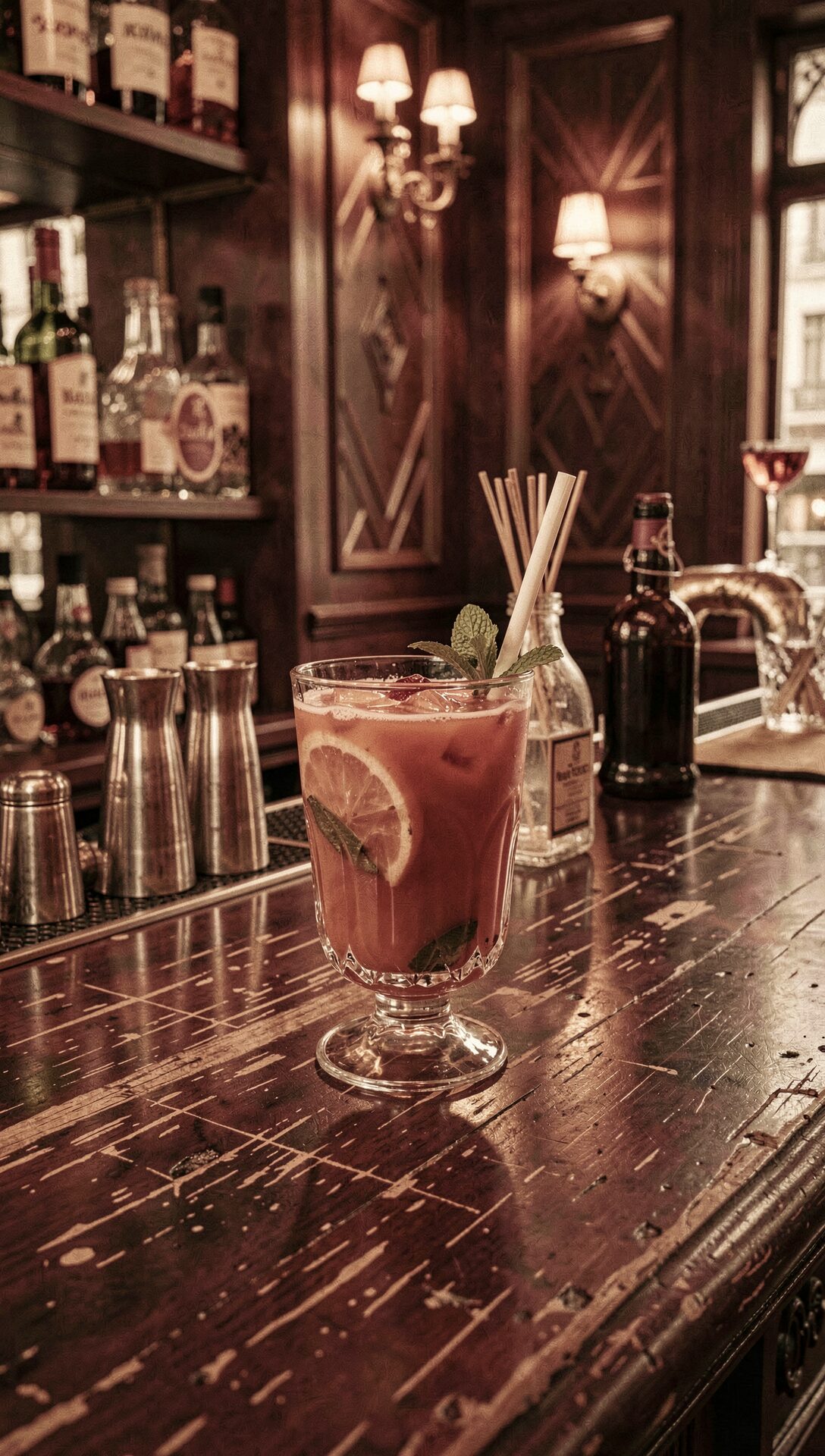
Few cocktails have a more contested origin story than the Bloody Mary. Almost everything about its history is disputed — who invented it, where, when, and who it was named after. What isn’t disputed is that it became one of the most iconic drinks in the world, and that it earned that status.
The most widely cited origin story places the creation at Harry’s New York Bar in Paris in the 1920s, attributed to a bartender named Fernand Petiot. The story goes that Petiot combined equal parts vodka and tomato juice — both relatively new to the cocktail world at the time — and called it a Bloody Mary, supposedly after Mary Tudor, the sixteenth-century English queen whose persecution of Protestants earned her the nickname.
Petiot later brought the drink to the King Cole Bar at the St. Regis Hotel in New York, where he refined it into something closer to what we recognize today — adding spice, Worcestershire sauce, lemon, salt, and pepper. The hotel, apparently squeamish about the name, briefly renamed it the Red Snapper. It didn’t stick.
There are competing claims. George Jessel, an American entertainer, claimed he invented the drink in the 1940s. Ernest Hemingway reportedly had his own version. Luminaries of the mid-century cocktail world all seem to have had a hand in it at some point.
What’s clear is that the Bloody Mary found its true cultural home at brunch, where its reputation as a hangover cure — medically dubious but psychologically powerful — made it the unofficial drink of Sunday morning recovery everywhere from Manhattan to Los Angeles.
The drink has evolved enormously since Petiot’s Paris days. The garnish arms race, the regional variations, the craft mix movement — all of it built on that original, improbable combination of vodka and tomato juice in a Paris bar a century ago.
Not bad for a drink nobody can quite agree on.
A note on this post: I worked with an AI writing tool to help shape and refine some of the language here. The fascination with cocktail history is entirely my own.
Leave a Reply