The Lacto-Fermented
Bloody Mary
This fermented Bloody Mary starts with plain tomatoes, a 2 percent brine, and five days on the counter, building a tang no bottle or fresh juice can match.
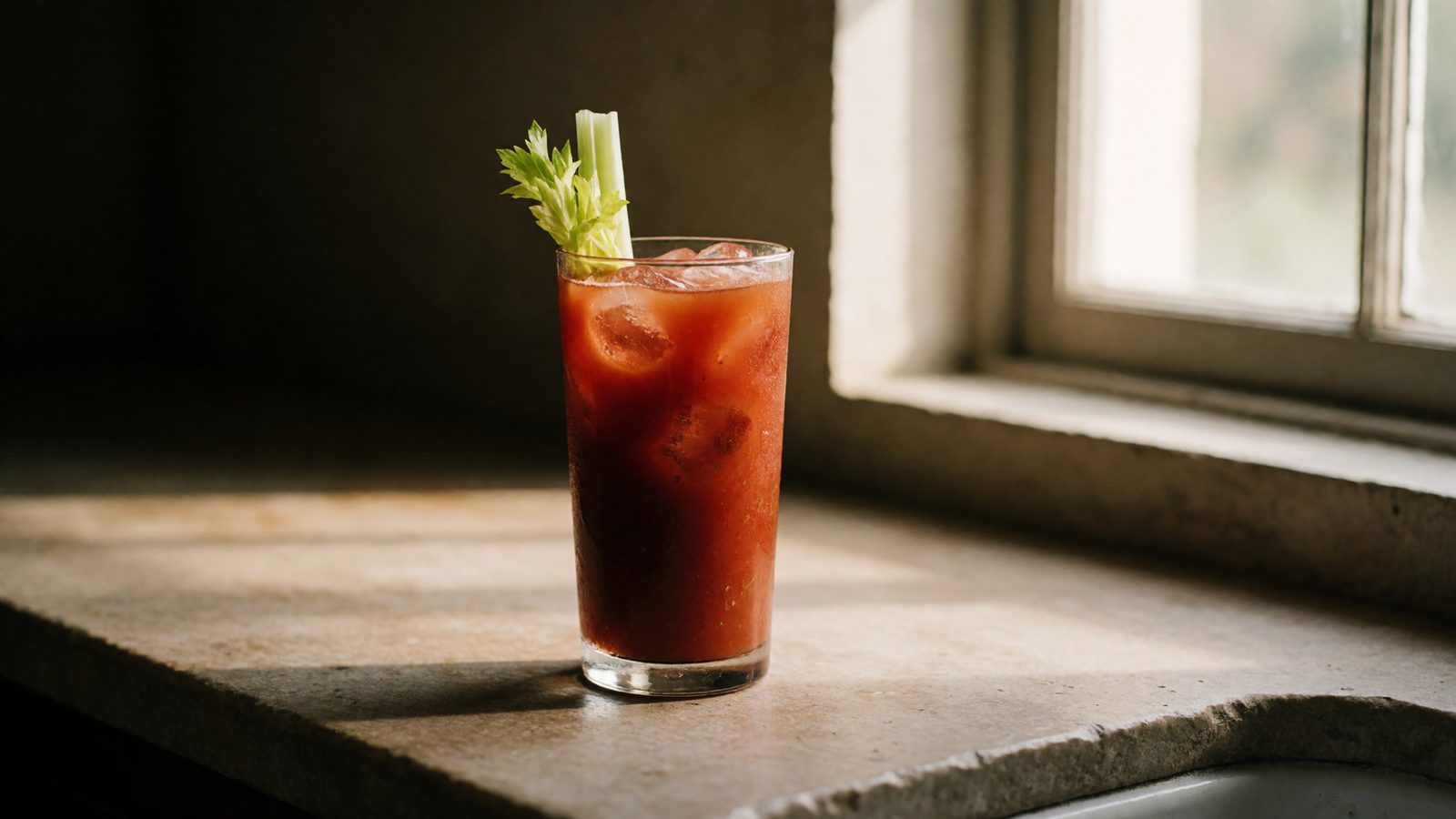
A commercial bar cannot wait five days for a garnish to be ready. Your kitchen counter can. This recipe splits cleanly into two parts: a five-day tomato ferment you do once and keep in the fridge for weeks, and a two-minute build using it. The ferment replaces both the acid and a good share of the seasoning a normal Bloody Mary gets from citrus and salt, because lactic acid bacteria have already done that work for you.
- For the ferment: ripe tomatoes, cored and quartered2 lbs
- Non-iodized salt (kosher or canning salt)2% of tomato+water weight
- Filtered water (non-chlorinated)as needed to submerge
- For the drink: vodka2 oz
- Fermented tomato base (recipe below), pureed and strained4 oz
- Worcestershire sauce2 dashes
- Fresh cracked black pepperseveral cracks
- Ice1 fill
- Celery stalk and lemon wedge, for garnish1 each
- 1Five days ahead: weigh the quartered tomatoes. Pack them into a clean quart jar, leaving 2 inches of headspace.
- 2Make a 2% brine by weight: weigh your water, multiply by 0.02, and dissolve that much salt into it. Pour the brine over the tomatoes until fully submerged, using a fermentation weight or a small food-safe bag of extra brine to keep them under the liquid.
- 3Cover loosely (an airlock lid or a cloth secured with a rubber band both work) and leave at room temperature, out of direct sun, for 4 to 6 days. Check daily; press any tomatoes that float back under the brine.
- 4The ferment is ready when it tastes distinctly sour rather than salty-sweet, usually day 5. Blend the tomatoes with enough of their own brine to reach a pourable consistency, then strain out the skins and seeds through a coarse sieve. Refrigerate; it keeps 2 to 3 weeks.
- 5To build the drink: fill a highball glass with ice. Add vodka, then the fermented tomato base, Worcestershire, and black pepper.
- 6Stir gently, six to eight turns. Garnish with celery and a lemon wedge.
Why five days and not fewer
Lactic acid bacteria, mainly strains in the Lactobacillus and Leuconostoc families, are already present on raw tomato skins. In a 2% salt brine, that salt concentration is high enough to slow down spoilage organisms but low enough to let the lactic acid bacteria thrive, which is the entire mechanism a vegetable ferment depends on. Over the first day or two the brine is still closer to neutral pH and less selective; by day 4 or 5, the lactic acid bacteria have produced enough acid to drop the pH well under the 4.6 threshold that food-safety guidance uses as the line below which Clostridium botulinum cannot grow. Stopping early, at day 2 or 3, gives you a ferment that is not yet reliably safe by that standard and also just tastes like salty tomato water rather than something genuinely fermented.
The salt math, and why it isn’t optional
A 2% brine means 2 grams of salt for every 100 grams of water (or tomato liquid) in the jar — weigh it, don’t eyeball it. Too little salt and spoilage bacteria can outcompete the lactic acid bacteria before the pH drops far enough to protect the batch; too much salt and the ferment stalls or turns unpleasantly harsh. The National Center for Home Food Preservation’s general fermenting guidance puts the workable range at roughly 2 to 3 percent salt by weight for vegetable ferments generally; this recipe sits at the lower, brighter-tasting end of that range on purpose, since a Bloody Mary base needs to be pourable, not a pucker-inducing pickle.
Reading the ferment
A healthy ferment smells sharply sour, slightly effervescent, unmistakably alive — not rotten, not sulfurous, not like nail polish remover. Some cloudiness in the brine is normal and is mostly harmless yeast, not a defect. A thin white film on the surface (kahm yeast) is common and can simply be skimmed off. Any fuzzy mold, black or pink discoloration, or a smell that reads as genuinely putrid rather than sour means the batch failed and should be discarded, not tasted to check.
Why this changes the glass
A standard Bloody Mary gets its acid mostly from lemon juice added at the very end, as a bright top note. A lacto-fermented base builds acid into the tomato itself, low and structural rather than bright and topical, closer to the way a good vinegar or a properly made kimchi brine reads on the palate. That’s also why this base is more forgiving of a heavier pour of Worcestershire or hot sauce than a fresh-juice build would be — the fermented acid gives the other seasonings something sturdier to sit on top of.
Fermented Bloody Mary: Frequently Asked Questions
Is it safe to ferment tomatoes at room temperature?
Yes, provided the tomatoes stay fully submerged under a properly measured brine (2 to 3 percent salt by weight) and the batch is given enough time — typically 4 to 6 days at normal room temperature — to reach a safely low pH. Submersion matters as much as the salt percentage: any tomato exposed to open air is a spoilage risk regardless of brine strength.
How much salt do I need for a 5-day tomato ferment?
Weigh your tomatoes and water together, then use 2 percent of that combined weight in salt. For roughly 2 pounds of tomatoes plus enough water to submerge them (call it 900 grams total), that’s about 18 grams of salt — a kitchen scale is worth using here rather than measuring by volume.
Can you lacto-ferment store-bought tomato juice instead of whole tomatoes?
Not by the same method. Store-bought juice is typically pasteurized, which kills the lactic acid bacteria the ferment depends on, and it often already contains salt and preservatives that throw off the brine math. Start from whole, raw tomatoes.
What does lacto-fermented tomato taste like?
Distinctly sour and savory rather than sweet-acidic the way fresh tomato juice is — closer in character to a good brine or a light vinegar, with more depth and a faint effervescence. It reads as “more tomato,” not “different from tomato.”
Sources
- National Center for Home Food Preservation (University of Georgia) — General Information on Fermenting, for brine percentage and the pH 4.6 safety threshold.
A note on how this was written
The fermentation science and safety thresholds here come from the National Center for Home Food Preservation’s published guidance, linked above. The build itself — using the fermented base at a 4 oz pour, skipping citrus, and the note about it tolerating a heavier hand with Worcestershire — is a straightforward application of that guidance to a Bloody Mary rather than a personally tasted result; treat the exact seasoning amounts as a starting point to adjust to taste.
Related Reading
- Salt Brine Mathematics: The Formula for Perfect Fermentation
- The Altitude Effect — Why Tomato Juice Tastes Better at 30,000 Feet
- For the classic build this one departs from, see the bloody mary recipe.