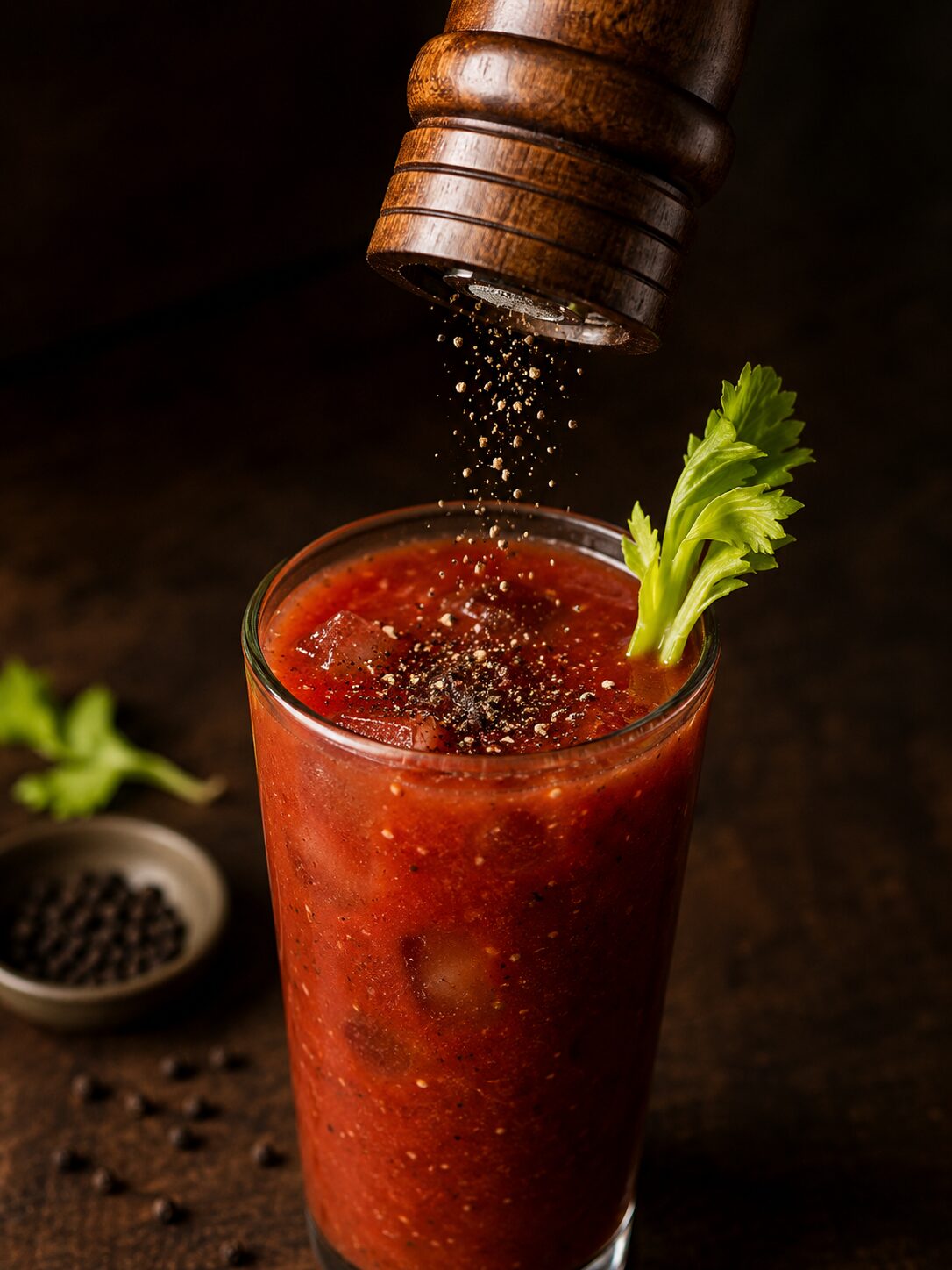
Pepper is the ingredient most people grab the cheap supermarket can for. It’s also one of the three or four flavors you actually taste on the front of every sip of a Bloody Mary. The gap between those two facts is the entire point of this post.
The difference between freshly cracked Tellicherry peppercorns and the pre-ground pepper that’s been in your cabinet since 2022 is bigger than the difference between Tito’s vodka and Grey Goose. And it costs less to fix.
The chemistry
Black pepper’s flavor comes from piperine — a chemical cousin of capsaicin (the compound that puts the heat in chili peppers). Like capsaicin, piperine is volatile. It evaporates fast once the peppercorn is broken open.
Pre-ground pepper loses approximately 40 to 60 percent of its piperine within two weeks of grinding. The can that’s been sitting in your spice cabinet since 2022 is mostly inert. The pepper is still there. The pepper flavor isn’t.
This is why fresh-cracked pepper tastes alive and pre-ground pepper tastes flat. The chemistry doesn’t allow a different outcome.
The grades worth knowing
Tellicherry — the gold standard, grown on the Malabar coast of southwest India. Larger berries than standard black pepper because they’re left on the vine longer to fully mature. More complex flavor: floral and citrus top notes, a clean pepper bite, no harshness. The best general-purpose pepper for a Bloody Mary. Costs about $12-15 for a quarter pound, lasts a year.
Lampong — Indonesian, the workhorse pepper of the spice trade. Sharper than Tellicherry, less floral, more straight-ahead heat. Excellent in a Bloody Mary when you want the pepper to register clearly rather than blend into the background.
Sarawak — Malaysian, mild and fruity with almost cardamom-like top notes. Lovely for premium builds where you want the pepper to whisper rather than shout. Most home cooks have never tasted it; Bloody Marys are an excellent first introduction.
Kampot — Cambodian, harder to source, expensive. Smoky and complex with a depth that no other peppercorn matches. Worth it for special occasions. The kind of ingredient you bring out for a Bloody Mary you want someone to remember.
The fresh-cracked vs. pre-ground test
Pour two identical Bloody Marys. Add a heavy eight grinds of fresh Tellicherry to one. Add an equivalent volume of pre-ground supermarket pepper to the other. Same drink otherwise — same vodka, same Worcestershire, same hot sauce. Cover the glasses, shuffle, taste.
The fresh-cracked drink tastes alive. The pre-ground drink tastes flat in a way you can’t articulate until you have them side by side. Then it’s obvious.
This test convinces more skeptics than any other comparison in the Bloody Mary tasting playbook. People who told you “pepper is pepper” leave the table reorganizing their spice cabinet.
White pepper as an alternative
White pepper is black pepper with the outer hull removed and a slightly different fermentation process. Less assertive than black pepper, more “background warmth,” and — crucially — invisible in the drink. No visible specks.
Used in some Asian cuisines for cocktails and in classic French cooking where visible pepper specks would be considered a flaw. Underused in Bloody Marys. Worth trying as a contrarian move, especially on a Bloody Maria where white pepper plays well with lime and tequila in a way that black pepper doesn’t quite achieve.
For a Bloody Mary specifically, try replacing half your black pepper with white. The result is rounder, gentler, and surprisingly elegant.
Peppercorn-infused vodka
The upgrade move that almost no home recipe mentions.
Add one tablespoon of cracked Tellicherry peppercorns to a 750ml bottle of vodka. Steep 36 to 48 hours. Strain through a fine-mesh strainer back into the bottle, discarding the peppercorns.
The resulting vodka carries a soft pepper finish through every sip of the drink. Pepper integrated into the alcohol works differently than pepper added at the end — it’s smoother, more diffuse, and present in a way that ground pepper on top of the drink can’t replicate.
Substitute one ounce of pepper vodka for one ounce of regular vodka in a standard Bloody Mary. The drink develops a quiet, persistent pepper note that runs from the first sip to the last.
How much per drink
A Bloody Mary can take more pepper than most people add. Be generous.
- 2-3 grinds — timid. Pepper is barely registering.
- 4-6 grinds — present. The pepper is doing useful work.
- 6-10 grinds — assertive. This is the sweet spot for most Bloody Marys.
- 10+ grinds — heavy. The pepper is a top note, not a background. Some drinks call for this.
If you can’t see flecks of pepper visibly suspended in the drink, you’ve under-peppered. Fresh-cracked pepper is meant to be a top note, not a whisper.
The serving-time rule
Pepper added five or more minutes before serving sinks and integrates. The piperine has time to disperse, the heat blends into the overall flavor profile, and you get a drink that’s evenly peppered throughout.
Pepper added at the moment of serving floats and lands on the first sip as a sharp top note. The piperine is concentrated at the surface; subsequent sips taste milder.
Both are valid. The first is the right move for batch pitchers where consistency matters. The second is more dramatic and gives the drink a real opening punch — useful for individual cocktails where you want the first impression to land.
The grinder question
Burr grinders beat blade grinders. Burr mechanisms (ceramic or steel) crush the peppercorn cleanly, releasing piperine without generating heat. Blade grinders bruise the peppercorns, generating heat and releasing more bitter compounds along with the piperine.
A $30 manual ceramic burr grinder outperforms most $5 pre-filled disposable grinders by a large margin. The disposable grinders also tend to come pre-filled with pepper that’s already lost most of its volatile compounds before you bought it.
If your Bloody Mary game is serious enough to be reading a 1,200-word post on pepper, replace your grinder before you replace your vodka. The return on investment is higher.
The pairing test
Identical drinks. One with pre-ground supermarket pepper. One with fresh-cracked Tellicherry. Eight grinds in each, equivalent by volume.
The difference registers within two seconds of the first sip. The fresh-cracked drink has pepper character that runs through the entire glass — top note, mid-palate, finish. The pre-ground version has flat pepper character that arrives once and never quite returns.
This is the cheapest meaningful upgrade you can make to your Bloody Mary game. A bag of Tellicherry peppercorns and a burr grinder cost less than a bottle of the vodka you’re trying to drink. The difference in the finished drink is larger.
The principle
Most Bloody Mary writing focuses on the dramatic ingredients — the horseradish, the hot sauce, the Worcestershire. Black pepper gets a single line in most recipes. “Black pepper, to taste.” Almost no one explains what “to taste” should taste like, or what kind of pepper you should be tasting with.
Get the pepper right and the rest of the drink reads better. Get it wrong and the whole architecture sags a little. This is the smallest investment with the largest invisible payoff in the entire Bloody Mary canon.
A note on how this was written
This post was written with AI assistance. The piperine chemistry and the regional descriptions of pepper grades are verified. The dosing rules, the white pepper experiment, and the peppercorn-vodka infusion are from my own kitchen. The “replace your grinder before your vodka” advice is hard-won and slightly heretical, but right.
Leave a Reply