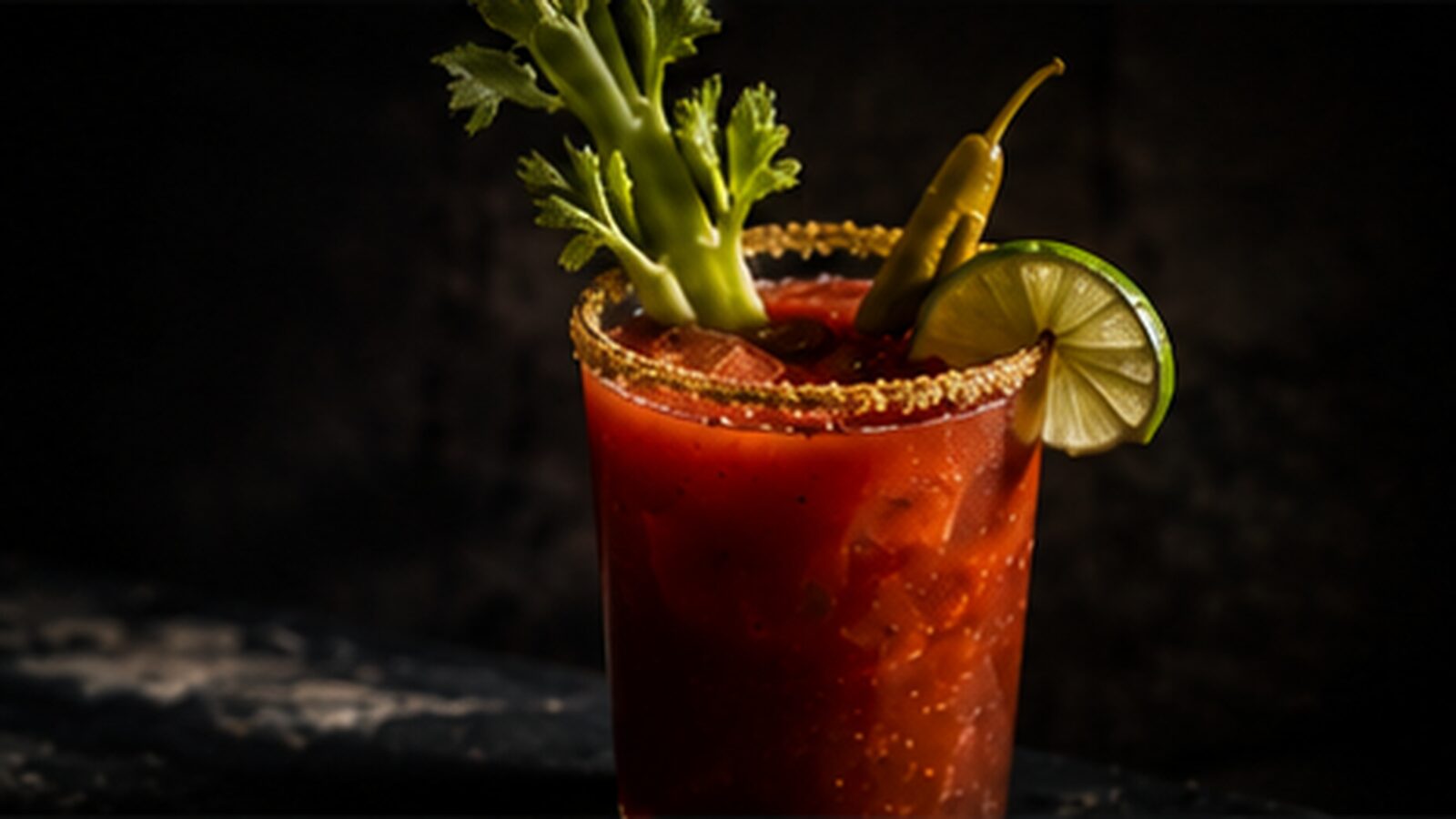
In May 1969, a bartender named Walter Chell at the Calgary Inn was tasked with inventing a signature cocktail for a new Italian restaurant opening in the hotel. He spent three months. The drink he landed on was meant to echo spaghetti vongole — clam, tomato, brine, garlic. He called it the Bloody Caesar. It became the unofficial drink of an entire country within a decade.
Canadians drink about 350 million Caesars a year. It is the national cocktail in everything but legislation. It is so culturally embedded that Mott’s launched a year-round line of Caesar-specific mixes, and most pubs in Canada list “Caesar” on the menu before they list “Bloody Mary.” Asking a Canadian which one they prefer is like asking an American whether they want a coffee or a Frappuccino.
And yet south of the border, the Caesar barely exists. Most American bartenders have never made one. Most American liquor stores don’t carry Clamato. It is one of the great cocktail blind spots of an entire country.
What makes it different from a Bloody Mary
The Caesar is, on the surface, a Bloody Mary built on Clamato instead of tomato juice. That’s the headline change, and it’s the one that matters most. Clamato’s umami depth changes the whole architecture of the drink — the savory layer is doing more work, so the spicing leans cleaner. Less is more.
But there are three other differences that matter:
The rim is celery salt, not regular salt. This is non-negotiable. A Caesar without a celery salt rim is just a Bloody Mary in a Canadian accent.
The garnish discipline is tighter. Caesars traditionally use a single celery stalk, a lime wedge, and one pickled bean spear. The over-the-top Bloody Mary-as-meal trend that took over American brunch culture didn’t happen in Canada in the same way. Caesars stay drinks.
The spicing leans lighter on the horseradish and heavier on the hot sauce. Frank’s RedHot is traditional. So is Tabasco. The Worcestershire is non-negotiable.
Why it’s the better drink
Three reasons.
First, the umami. Clamato is doing work that a Bloody Mary built on plain tomato juice has to engineer in via horseradish, anchovy paste, soy, or fish sauce. The Caesar gets that depth for free, which means the drink reads cleaner without sacrificing complexity.
Second, the celery salt rim. The first thing you taste with every sip is the rim, and celery salt is a more interesting flavor than plain kosher. It also primes your palate for the savory mid-palate of the drink in a way that ordinary salt doesn’t.
Third, the restraint. American Bloody Marys have escalated into an arms race of skewered protein and pickled vegetable towers. A Caesar is a drink, not a charcuterie board on a glass. The simpler garnish architecture leaves you actually able to drink the thing.
How to find a real one in the U.S.
Bars that have Canadian bartenders. Bars that have menus listing “Caesar” as a distinct cocktail. Anywhere near the border. A handful of serious cocktail bars in major American cities will know what you mean. Most won’t.
The reliable move is to make one yourself. Clamato is increasingly available in U.S. grocery stores — Whole Foods carries it; many Targets do; large H-E-B and Kroger stores stock it. Once you’ve got a bottle, the rest of the ingredients are already in your kitchen.
If you’ve never had a real Caesar, the gap between this drink and the average American Bloody Mary will surprise you. The next time you reach for tomato juice, ask yourself whether you’d rather be making a competent Bloody Mary or a Caesar that knows what it’s doing.
A note on this post: I worked with an AI writing tool to help shape and refine some of the language here. The opinion that Canada has been right about this drink for fifty years is entirely my own.
Leave a Reply