Bartenders hate bloody marys at exactly this moment: order one at a crowded bar at nine on a Friday night and watch what happens to the bartender’s face. It isn’t hostility exactly. It’s closer to the specific fatigue of someone being asked to do a small, disruptive, out-of-rhythm task in the middle of a much faster one.
This is the sequel to an essay we wrote about the Bloody Mary as the last kitchen cocktail. That piece argued the drink survives because it resists the shelf-stable, poured-from-a-can treatment every other classic has accepted. This one picks up the other half of that argument: the exact reasons a busy bar struggles with this drink are the reasons a home kitchen is where it actually belongs.
Why Bartenders Hate Bloody Marys: A Dozen Ingredients, Mid-Rush
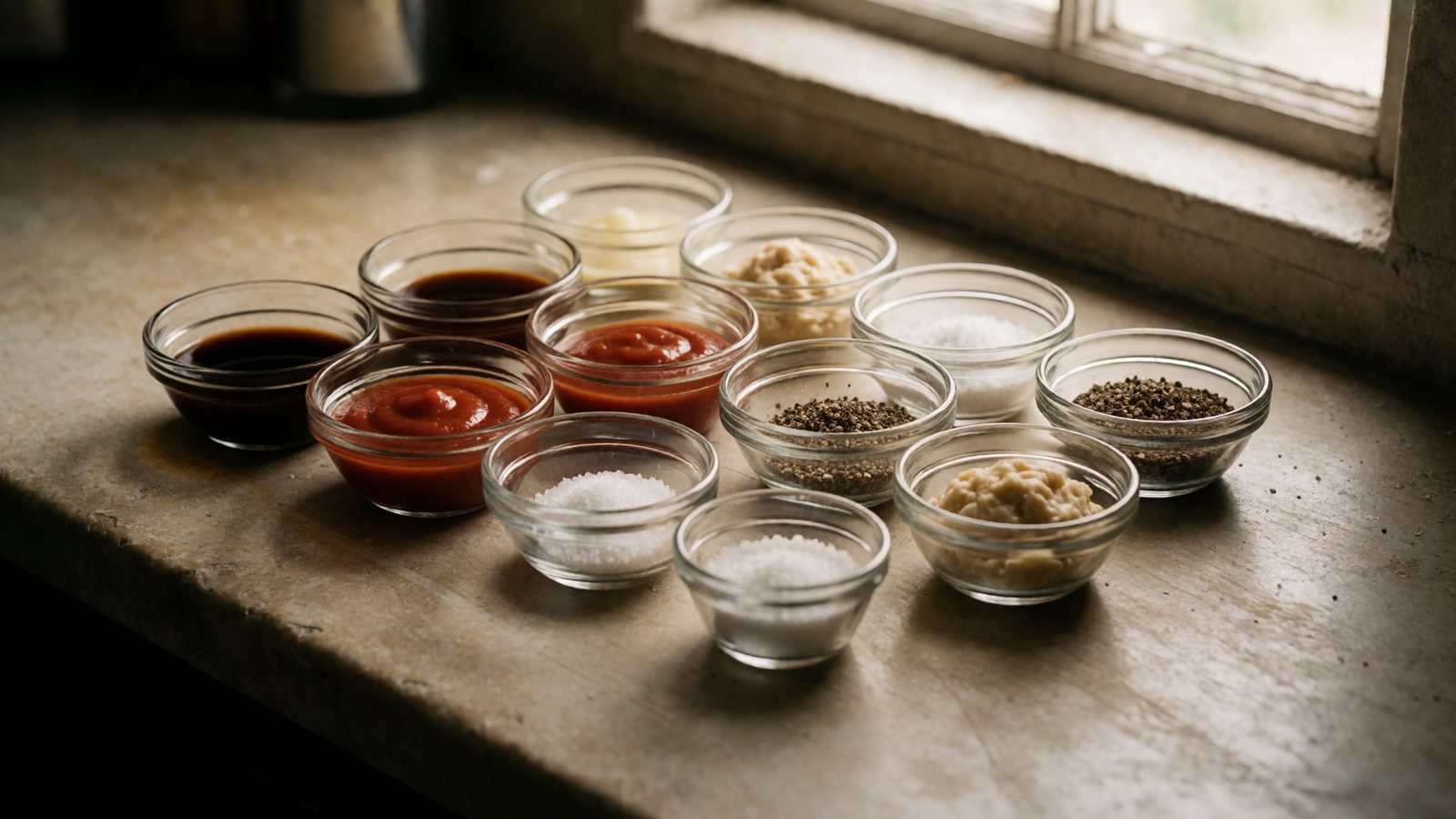
Most cocktails a bar serves during a rush are built from two or three components measured fast: a spirit, a modifier, maybe a citrus. A properly built Bloody Mary asks for closer to a dozen: a base, a spirit, Worcestershire, hot sauce, horseradish, salt, pepper, a rim, and however many garnishes the house puts on it. None of that is hard. All of it is slow, relative to everything else a bartender is making in the same ninety seconds.
That mismatch is well documented in industry-facing writing about bar work generally, and it’s specific enough a complaint that it has its own dedicated r/cocktails discussion thread asking the question outright. One reply, from a bartender posting as u/bobisagirl, lays out the actual problem better than any trade article does:
“I hated making them because everyone likes them differently. Do you want what is effectively cold tomato soup, or vodka-flavoured hot sauce? To ice or not to ice? Do you want a weird pepper rim? Are you going to cry when we don’t have celery sticks? Why are you doing this to me?
— u/bobisagirl, r/cocktails
Solution: ‘Here is a glass of vodka and tomato juice. Here is all the other stuff. Flavour it yourself. That’ll be 6.50 please.’”
Another commenter, u/towehaal, replied that this isn’t hypothetical: some bars have built exactly that workaround into an actual self-serve setup, handing over a glass of vodka on ice and letting the customer build the rest at a station. That’s not a bartender giving up on the drink. It’s a bartender independently arriving at the same conclusion this site is built around: the Bloody Mary works best as something you build yourself, on your own timeline.
The rinse sink problem
Every bar has a small sink for rinsing glassware between drinks, and tomato juice is uniquely bad news for it — it’s viscous, it’s pigmented, and it clings to glass and steel in a way clear spirits and mixers don’t. One Bloody Mary mid-shift means a rinse sink that needs real attention, not a quick dunk, at the exact moment a bartender has the least time to give it.
None of this is a design flaw in the drink. It’s a mismatch between what the drink needs and what a fast bar is built to deliver. A kitchen counter doesn’t have a rush. It doesn’t have a rinse sink shared by four other bartenders. It has a sink, a cutting board, and as much time as you want to take.
The custom-order problem
Beyond the ingredient count, a Bloody Mary is one of the few classic cocktails where every customer has genuine, specific opinions about the build. Nobody sends back a gin and tonic for having the wrong ratio, but a Bloody Mary arrives with an implicit menu of decisions: how much heat, whether horseradish is welcome or unwelcome, whether the ice is a plus or a dilution risk, what the garnish should be. A bartender making ten of them in a row during a busy brunch service isn’t making the same drink ten times, they’re negotiating ten small custom orders, each with its own chance to not match what the customer actually wanted.
That variability is part of why professional brunch services often solve this the same way u/towehaal described: hand the customer the base components and let them build to their own taste, turning a bartender’s ten unpredictable custom orders into ten self-served drinks nobody can blame the bar for getting wrong.
Ordering one after dark
There’s a real etiquette question buried in here too: is it rude to order a Bloody Mary at 9pm? Functionally, no bar rule forbids it. Practically, a twelve-ingredient brunch cocktail ordered during a packed evening service reads to the person making it as a request that doesn’t match the room — less a moral failing than a timing mismatch, the same way ordering a flight of drip coffee at a nightclub would be a strange thing to ask for, not a crime.
The Bloody Mary isn’t a rush-hour drink and was never really built to be one. It’s a slow, deliberate, ingredient-heavy ritual that happens to taste best in the morning, made by someone who isn’t racing a ticket printer. That’s not a compromise. That’s the whole appeal, and it’s exactly why this site exists to help you build it properly at home instead of apologizing for ordering it somewhere it doesn’t fit.
None of this is an argument against ordering one at brunch, where the entire service is already built around exactly this kind of drink. A dedicated brunch bar has the ice, the garnish station, and the unhurried pace a Bloody Mary actually needs; the mismatch is specifically about time and place, a fast evening bar during a packed shift, not the drink or the people ordering it. Know the room, and the same drink that’s a burden at 9pm on a Saturday is exactly what a brunch bartender is set up to deliver well.
Frequently Asked Questions
Why do bartenders find Bloody Marys frustrating to make?
The high ingredient count and custom build time don’t match the pace of a busy bar shift, unlike most cocktails that scale down to a fast two- or three-ingredient pour.
Is it rude to order a Bloody Mary at night?
Not against any actual rule, but it’s a mismatch of timing and expectation — a slow, ingredient-heavy brunch drink ordered in the middle of a fast evening rush stands out to whoever has to make it.
Why is the rinse sink a problem for tomato juice specifically?
Tomato juice is thick and pigmented compared to most bar mixers, and clings to glassware and steel tools in a way that needs real cleaning rather than a fast rinse — exactly the kind of task a busy bar has the least time for mid-shift.
Do bartenders judge you for ordering extra garnishes?
Some find it disruptive during a rush for the same reason the base drink is disruptive — every extra component is more time away from the rest of the queue. It’s a timing complaint, not a judgment of taste.
Sources
- “Why do most bartenders hate making Bloody Marys?” — r/cocktails, quoted above with attribution (u/bobisagirl, u/towehaal).
- General bartender-culture commentary on high-ingredient-count, custom-built drinks disrupting service pace is a widely discussed theme in industry-facing writing about bar work.
A note on how this was written
This piece was written with AI research assistance. Gene pointed to a real r/cocktails thread asking this exact question and sent a screenshot of the actual comments, since Reddit blocks automated fetching from every angle tried (direct fetch, old.reddit mirror, the public .json API). The quotes above are transcribed directly from that screenshot, not reconstructed or paraphrased.
Related Reading
- The Last Stand of the Kitchen Cocktail
- The Blueprint for the Ultimate Self-Serve Bloody Mary Bar
- For the recipe worth making at your own pace, see the bloody mary recipe.
Leave a Reply