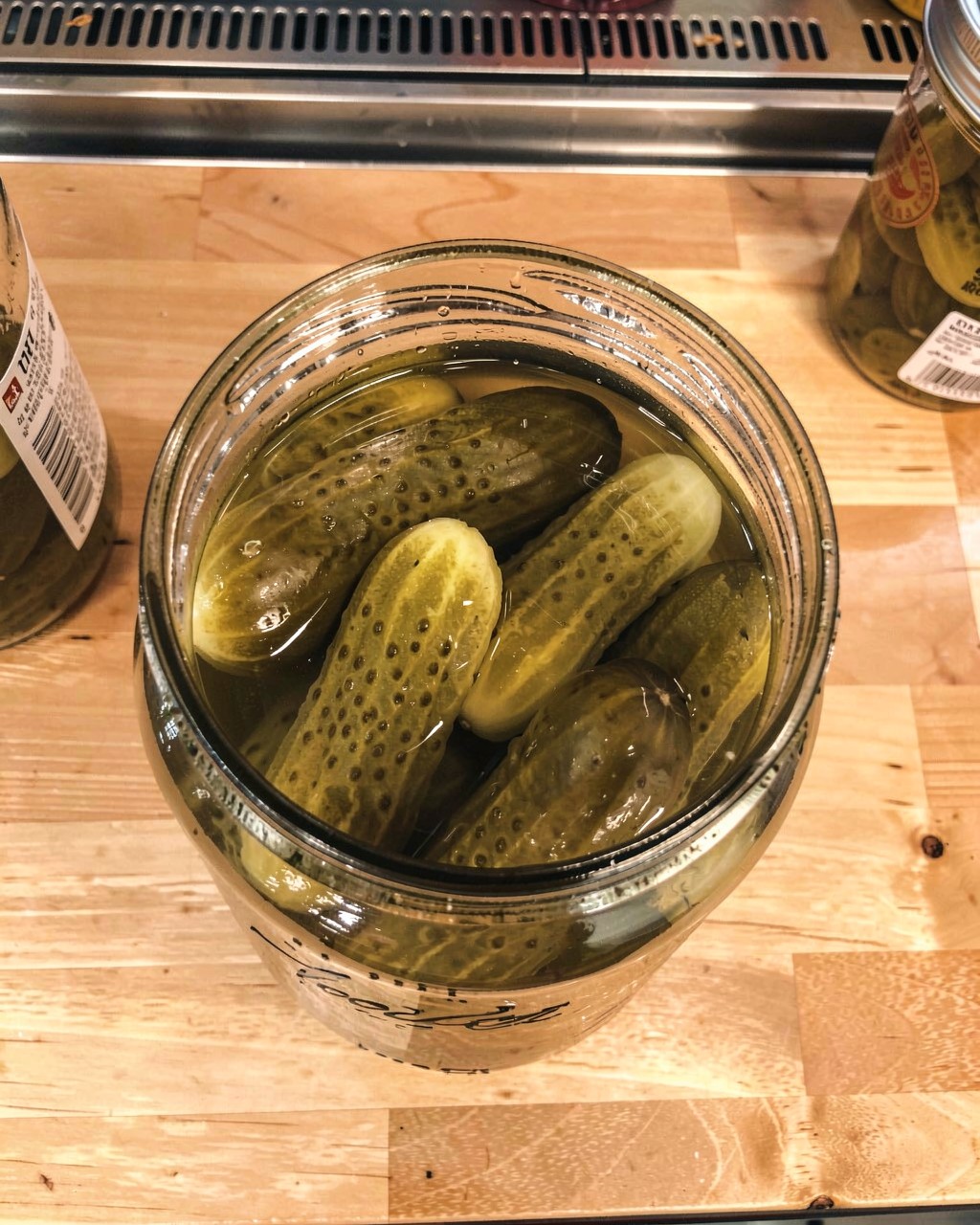
Pickle juice and Bloody Marys have been paired for decades, and we’ve written about that pairing on this site before — but almost all of that classic pickle-juice-Bloody-Mary tradition, including most of what’s floating around the internet, is built on quick, vinegar-based pickle brine. This recipe is about the other kind: the true, old-school, lacto-fermented deli pickle, and why its brine tastes like a genuinely different ingredient.
Vinegar pickle vs. full-sour, chemically
A vinegar pickle — sometimes called a “quick pickle” — is made by submerging cucumbers in a hot brine of vinegar, water, salt, and sugar. No fermentation happens; the vinegar’s acetic acid does all the pickling work, chemically, within hours or a day or two. It’s fast, shelf-stable, and consistent, which is why it dominates the grocery store shelf. A full-sour deli pickle is a completely different process: cucumbers go into a plain salt brine with garlic, dill, and spices, and Lactobacillus bacteria — again, the same family responsible for sauerkraut, kimchi, and true sourdough — slowly convert the cucumbers’ natural sugars into lactic acid over the course of one to several weeks. No vinegar is added at any point. The sourness is entirely a byproduct of fermentation, and it tastes like it: rounder, more complex, with a savory, almost yeasty depth underneath the tang that straight vinegar brine doesn’t have.
What “full-sour” actually means
“Full-sour” specifically refers to a pickle that’s been fermented the whole way through — as opposed to a “half-sour” or “new” pickle, which is pulled from the brine early, while the inside is still bright green and only lightly fermented. Full-sours are typically a duller, more olive-green color throughout, cloudier in the jar, and noticeably more pungent. If you’ve ever had a pickle from an actual deli counter — the kind pulled out of a barrel, not a shelf-stable jar — that’s almost certainly been a full or half sour, and it’s a meaningfully different food than what most people picture when they hear “pickle.”
Why this matters for a Bloody Mary
Brine, in general, has always made sense in this drink because it echoes the savory, briny, slightly funky flavor already coming from Worcestershire sauce and horseradish. But vinegar brine and fermented brine push that similarity in different directions. Vinegar brine adds sharp acidity on top of the drink’s existing flavors — useful, but a little one-dimensional. Fermented full-sour brine adds acidity and a savory, almost umami-adjacent complexity that echoes the Worcestershire rather than just sitting next to it, plus a garlicky, dilly aromatic quality baked into the brine itself from weeks of steeping with those seasonings during fermentation.
How to find real brine
Check the label. Ingredients should read something like cucumbers, water, salt, garlic, dill, and spices — no vinegar listed. Many will say “fermented in brine” or “old world” or reference live or active cultures directly. If vinegar is anywhere in the ingredient list, it’s a vinegar pickle, not a full-sour, and while it’ll still make a perfectly good Bloody Mary, it’s a different drink than the one this recipe is built around.
Ready to build one? Get the full recipe: Full-Sour Mary →
Leave a Reply