
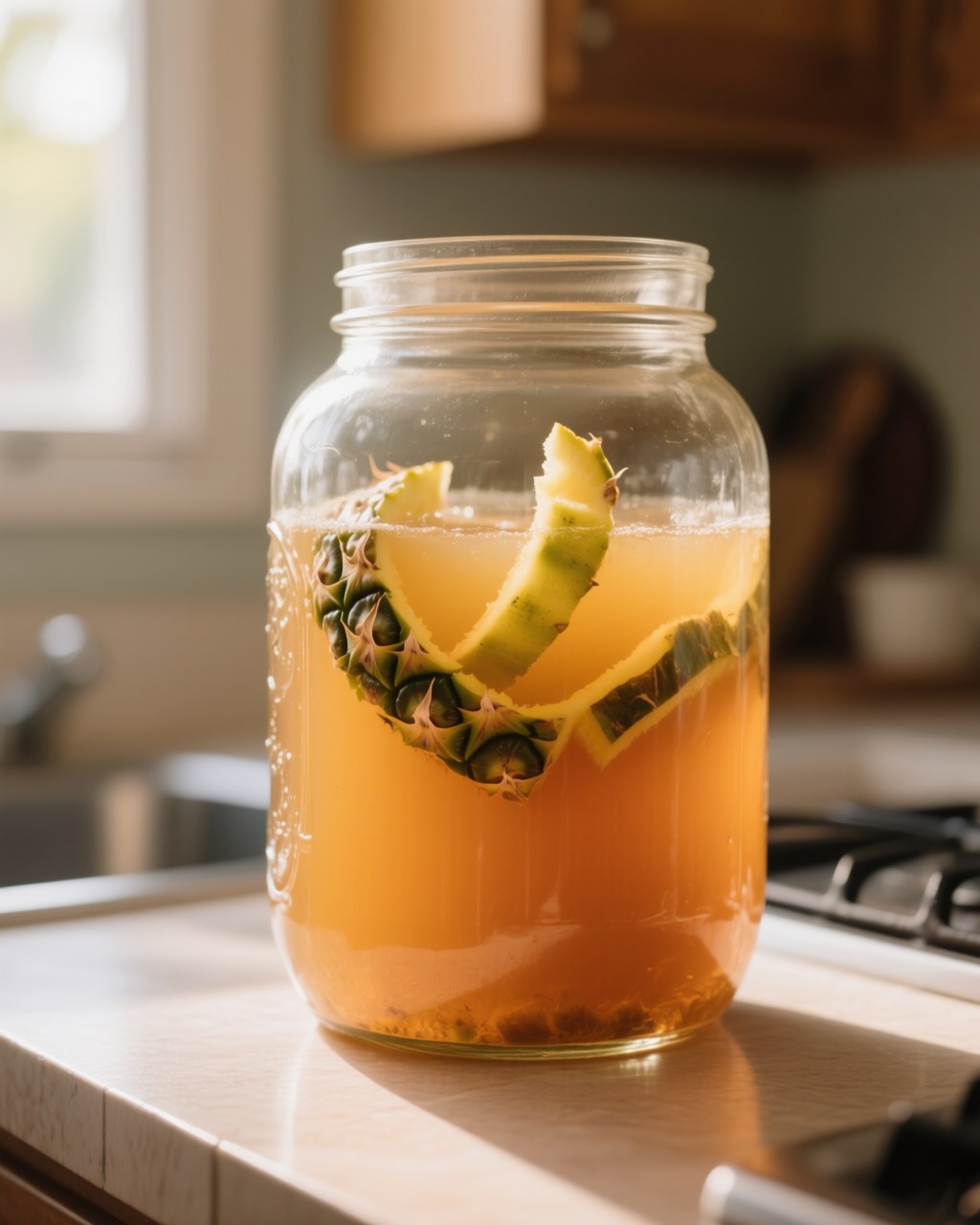
Tepache doesn’t get talked about as a “fermented ingredient” nearly as often as kimchi or miso do, mostly because it’s usually sold or served as a refreshing, everyday drink rather than a pantry staple — a paleta cart classic, not a health-food-aisle product. But it’s every bit as fermented, and once you know what’s happening in the pitcher, it’s an obvious fit for a Bloody Mary.
How tepache is traditionally made
Traditional tepache is made from the rind and core of a pineapple — the parts most people throw away — combined with piloncillo (unrefined cane sugar) or brown sugar, water, and often a stick of cinnamon or a few cloves, then left to ferment. Wild yeasts naturally present on the pineapple skin do the work, consuming the sugar and producing a small amount of alcohol along with carbon dioxide and organic acids, similar in broad strokes to the early stages of kombucha or a wild-fermented soda. The result is sweet, tart, lightly effervescent, and carries a distinct pineapple flavor that’s brighter and more complex than straight pineapple juice — the fermentation adds a tangy, faintly funky edge that raw pineapple simply doesn’t have.
The most fruit-forward entry in the lineup
This is the most fruit-forward entry in the whole fermented lineup, and it’s also the one that leans hardest into a specific regional identity: Mexican street-food and paleteria culture, where tepache is typically served ice-cold from large glass jars, sometimes with a dusting of chili powder on top. That chili-fruit combination — sweet, tart, spicy, salty, all at once — is a genuinely beloved flavor profile across Mexican snacks and drinks (think mangonadas, or a simple slice of fruit with Tajín), and it translates into a Bloody Mary almost without modification. The Tajín rim and pineapple garnish aren’t just decoration; they’re pulling this drink’s flavor logic straight from a michelada or a chamoy-and-fruit cup rather than from the drink’s usual British/American Worcestershire-and-horseradish tradition.
Why tequila works as well as vodka here
Tepache’s fruit-forward sweetness and tang have enough going on to stand up to blanco tequila’s vegetal, slightly peppery agave notes, which is more than you can say for some of the subtler entries in this lineup.
On sourcing
Good tepache is increasingly available bottled at Mexican grocery stores and some well-stocked general grocery stores.
Ready to build one? Get the full recipe: Tepache Mary →
Leave a Reply