
The Tepache
Bloody Mary
Sweet, tart, and a little wild — the most tropical entry in the fermented lineup.
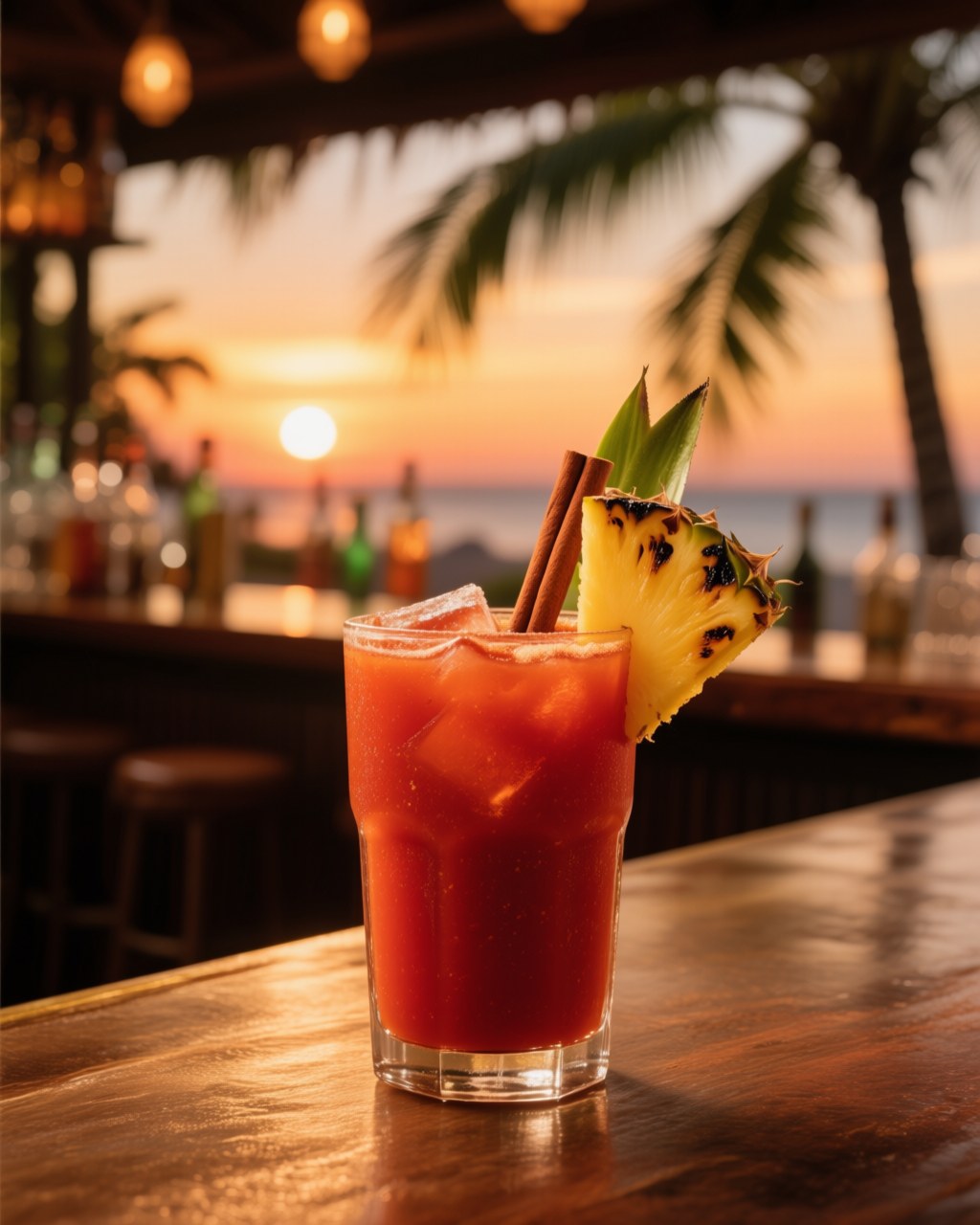
Tepache doesn’t get talked about as a “fermented ingredient” as often as kimchi or miso, mostly because it’s usually sold as an everyday refreshment rather than a pantry staple. It’s every bit as fermented, and it’s a natural fit here.
- Vodka or blanco tequila1.5 oz
- Tomato juice3 oz
- Tepache, chilled2 oz
- Fresh lime juice0.5 oz
- Tajín or other chili-lime seasoning, plus more for the rim1/4 tsp
- Hot sauce2 dashes
- Salt1 pinch
- Ice1 fill
- Pineapple wedge and lime wheel, for garnish1 each
- 1Rim a highball glass with Tajín; fill with ice.
- 2In a shaker, combine vodka or tequila, tomato juice, lime juice, Tajín, hot sauce, and salt. Hold the tepache out — it goes in last.
- 3Add ice and shake for 8 seconds.
- 4Strain into the prepared glass over fresh ice.
- 5Top gently with the chilled tepache. Garnish with the pineapple wedge and lime wheel.
What’s actually fermenting
Traditional tepache is made from pineapple rind and core — the parts most people throw away — combined with piloncillo (unrefined cane sugar) or brown sugar and water, then left to ferment. Wild yeasts and bacteria naturally present on the pineapple skin consume the sugar, though a study of homemade tepache found Bacillus species rather than the expected lactic acid bacteria (peer-reviewed research on homemade tepache microbiota). The result is sweet, tart, lightly effervescent, and carries a distinct pineapple flavor brighter and more complex than raw pineapple juice.
Why the flavor logic borrows from Mexican street food
The Tajín rim and pineapple garnish aren’t just decoration — they’re pulling this drink’s flavor logic from a michelada or a chamoy-and-fruit cup rather than from the drink’s usual Worcestershire-and-horseradish tradition. That sweet-tart-spicy-salty combination is a genuinely beloved flavor profile across Mexican snacks and drinks, and it translates into a Bloody Mary almost without modification.
Tepache Bloody Mary: Frequently Asked Questions
Is tepache alcoholic?
It contains a small amount of alcohol from fermentation, so it is not entirely alcohol-free.
Can I use tequila instead of vodka?
Yes — tepache’s fruit-forward sweetness and tang stand up well to blanco tequila’s vegetal, peppery agave notes.
Where can I buy tepache?
Bottled tepache is increasingly available at Mexican grocery stores and some well-stocked general grocery stores.
Sources
- PMC — peer-reviewed study on the microbiota of homemade tepache, a study of the microbes in homemade tepache.
A note on how this was written
The peer-reviewed study linked above looked at homemade tepache: it found Bacillus species rather than the expected lactic acid bacteria, and its authors caution about home-brewed wild ferments; general tepache tradition and Mexican street-food pairing context are widely documented culinary knowledge. The drink build is this site’s own recipe development; treat quantities as a starting point and taste your tepache batch before building, since fermentation speed varies.
Related Reading
- Want the story behind this one? Read The Ferment Hiding in Plain Sight →