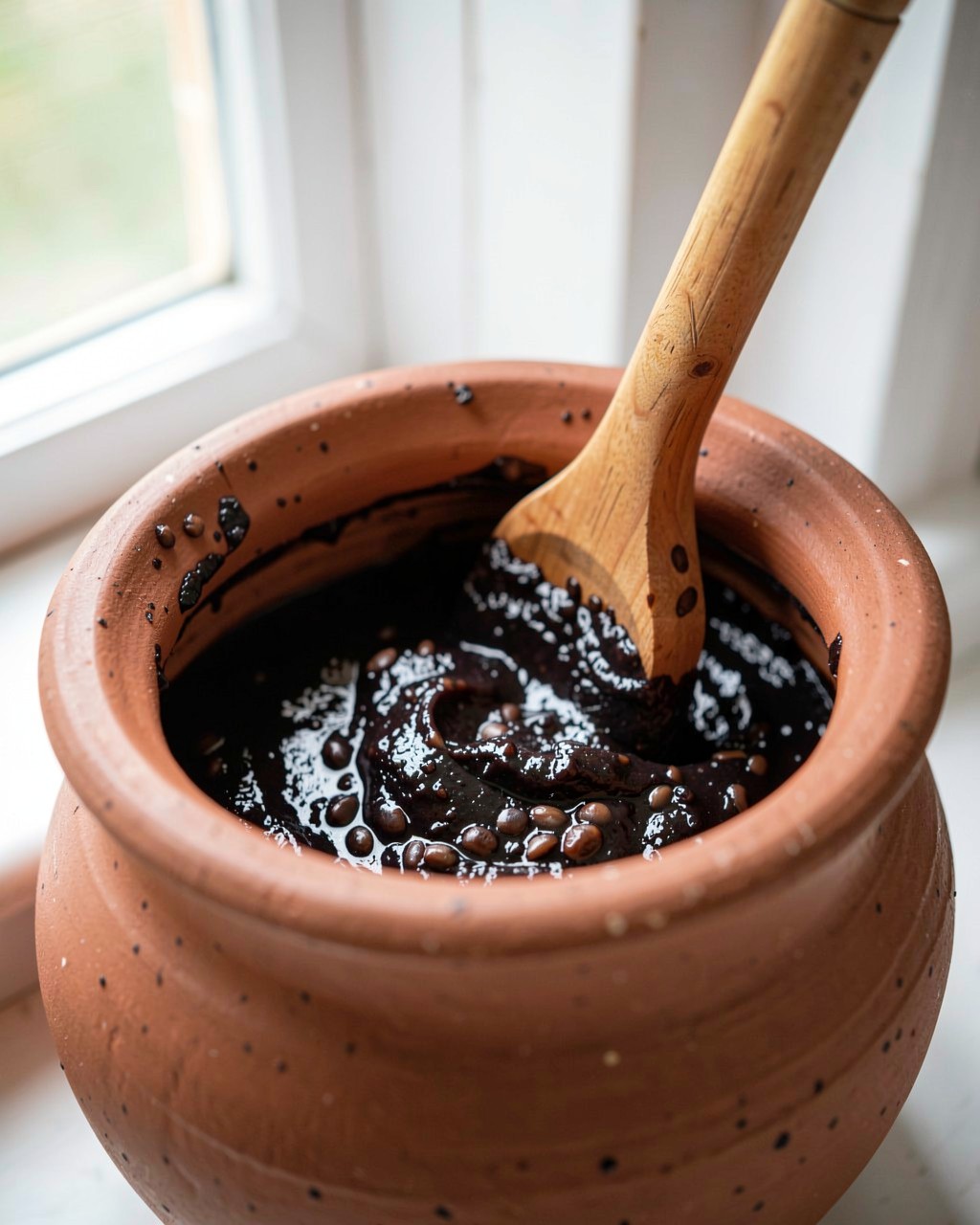
If miso is the ferment that convinces skeptics, doenjang is the one for people who already know they like the deep end. Both are fermented soybean pastes with roots in the same broad East Asian culinary tradition, and both deliver serious umami — but anyone who’s cooked with both will tell you they are not interchangeable, and this drink exists specifically to show why.
How doenjang is made
Doenjang is traditionally made from meju — blocks of boiled, mashed soybeans that are dried and left to ferment on their own, developing wild molds and bacteria, before being submerged in brine. After a period of brining, the liquid is drained off (that liquid becomes ganjang, Korean soy sauce) and the solid paste that remains is doenjang, which is then left to ferment further — sometimes for months, sometimes for years. That longer, more open, less controlled fermentation process (compared to miso’s typically more standardized koji-based method) is a big part of why doenjang tastes the way it does: earthier, muskier, more overtly “funky” in the way aged cheese or natto can read as funky to an unfamiliar palate. Miso, especially the milder white varieties, tends toward round and gently sweet. Doenjang skips round and sweet and goes straight to deep and savory-pungent.
Doenjang’s bolder sibling role
We already have a Miso Mary in this fermentation pillar, built to be the accessible, umami-curious entry point. The Doenjang Mary is its bolder sibling — same basic technique (dissolve the paste in warm water before it goes anywhere near the shaker or mixing glass), but a noticeably more assertive result. Where the Miso Mary reads as “this Bloody Mary tastes unusually rich,” the Doenjang Mary reads as “this Bloody Mary tastes like it has a savory, almost fermented-mushroom quality I can’t place” — which, chemically, is exactly what’s happening. Doenjang carries more of the coarser, un-hydrolyzed soybean solids than a typical smooth miso, along with a broader range of fermentation byproducts from its longer, less controlled process.
Why perilla leaf, specifically
Perilla leaf as the garnish is a deliberate pairing, not decoration. It’s a staple herb in Korean cooking, often served alongside doenjang-based dishes like doenjang jjigae, and its slightly minty, slightly grassy, faintly anise-like flavor is one of the few things that can stand up to doenjang’s intensity without fighting it. If you can’t find perilla, a shiso leaf (a close botanical relative, common in Japanese cooking) is the nearest substitute.
A note on sourcing
Doenjang is sold at most Korean grocery stores and increasingly at well-stocked international aisles, usually in a tub rather than a jar. Avoid substituting Japanese miso here if you can — they’re related concepts, but the flavor difference (round and mellow vs. earthy and pungent) is exactly the point of making these two separate drinks in the first place.
Ready to build one? Get the full recipe: Doenjang Mary →
Leave a Reply