
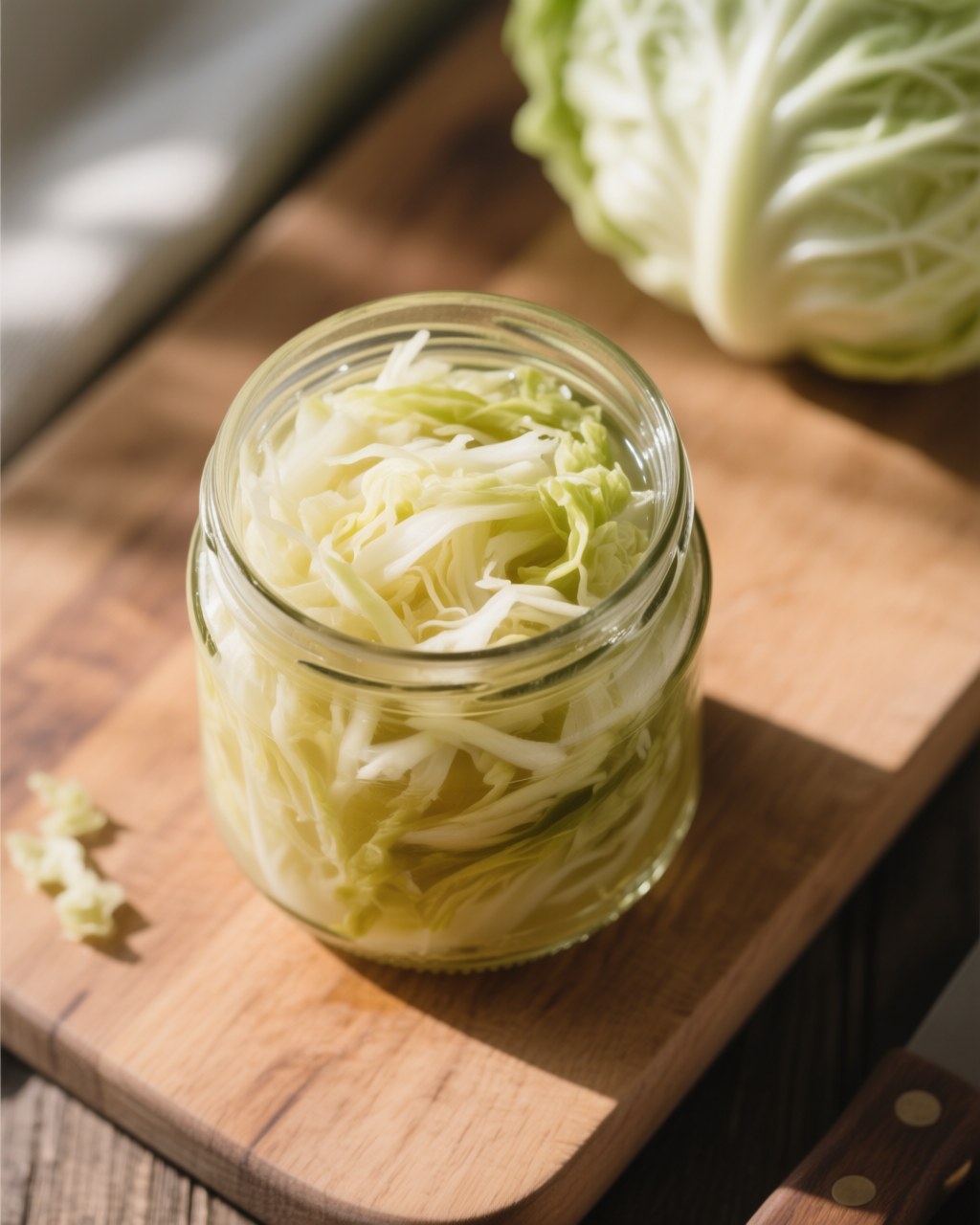
Most of the pickle juice that ends up in cocktails isn’t actually fermented. It’s vinegar brine — cabbage or cucumbers packed in a hot vinegar-and-sugar solution, shelf-stable, consistent, and completely bacteria-free. That’s not a knock on it; it’s a legitimate and popular category of pickle. But it’s a different thing, chemically and flavor-wise, from what happens in a real crock of sauerkraut, and the Kraut Mary exists to make that difference obvious.
Vinegar brine vs. real fermentation
True sauerkraut is cabbage, salt, and nothing else, transformed entirely by Lactobacillus bacteria over the course of weeks. No vinegar goes in — the sourness is produced, by the bacteria converting the cabbage’s natural sugars into lactic acid, the same process that makes yogurt tangy and sourdough sour. That’s the “lacto” in lacto-fermented. The brine that results is genuinely alive (until pasteurization or time slows it down): cloudy, faintly effervescent from the CO2 the fermentation throws off, and carrying a sourness that’s rounder and less sharp than vinegar’s straight acetic-acid bite. Taste vinegar brine next to real sauerkraut brine side by side and the difference is immediate — vinegar hits you high and sharp on the tongue; lacto-fermented brine sits lower and lingers.
Where this sits next to our other fermented drinks
This drink sits in true fermentation territory, with a specific, narrower focus: cabbage, not a mixed vegetable brine, and caraway rather than dill or garlic as the accent spice. Caraway is the classic partner to sauerkraut in Central and Eastern European cooking — think choucroute garnie, or a good reuben — and it does something specific here: its slightly citrusy, anise-adjacent oils cut against the brine’s tang and keep the drink from reading as one-note sour.
Why fermented brine works so well in a Bloody Mary specifically
The drink’s whole architecture is built on a push-pull between acid (traditionally lemon juice) and savory depth (traditionally Worcestershire and horseradish). Sauerkraut brine does both jobs in one pour — it’s acidic and it carries the savory, faintly mineral, almost briny depth that comes from bacterial fermentation, the same broad flavor family as a good olive brine or caper liquid. So the brine shares that structural work with the lemon juice and Worcestershire, adding more complexity than a bottle of lemon juice can offer on its own.
One honest caveat
Most sauerkraut sold at a standard grocery store, shelf-stable in a can or jar, has been pasteurized after fermentation specifically so it doesn’t keep fermenting (and eventually bursting containers) on the shelf. Pasteurization kills the live bacteria and flattens the flavor — you’ll still get sourness, but not the same rounded, alive quality. Refrigerated “raw” or “unpasteurized” sauerkraut, sold in most grocery stores’ refrigerated section near other fermented products, is what you want.
Ready to build one? Get the full recipe: Kraut Mary →
Leave a Reply