
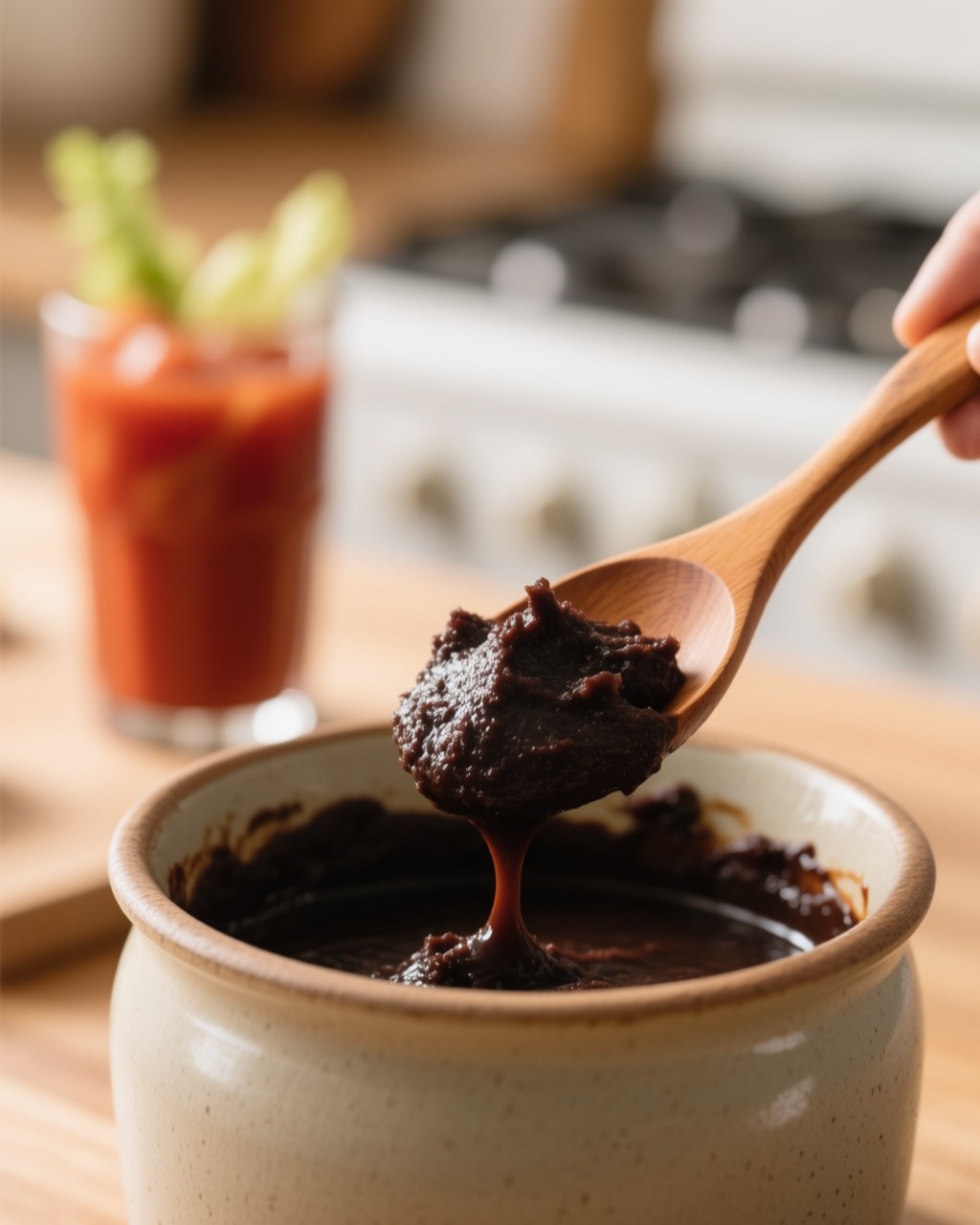
Not every fermented ingredient announces itself. Kimchi is loud — sour, spicy, visibly alive in the jar. Miso is the opposite kind of ferment: quiet, patient, and so thoroughly broken down by the time it reaches you that it barely registers as “fermented” at all. It just tastes like the best version of savory you’ve had. That’s the whole pitch for the Miso Mary — it’s the fermented lineup entry for people who think they don’t like funky drinks.
What koji actually is
Miso is soybeans (sometimes with rice or barley) inoculated with koji — the same mold culture, Aspergillus oryzae, that makes sake and soy sauce possible — then left to age anywhere from a few weeks to several years. During that time, enzymes break proteins down into free amino acids, including glutamic acid, the compound most responsible for what we now call umami. This is the same basic chemistry that makes a long-simmered stock or a well-aged cheese taste “savory” in a way that’s hard to pin down — you’re tasting broken-down protein, essentially pre-digested by time and microbes.
How this differs from our other umami recipe
We already have an umami-driven recipe on the site — the Black Garlic Shiitake Umami Bloody Mary — but that one builds its depth from roasted, caramelized notes: black garlic’s molasses-like sweetness, shiitake’s meaty richness. Miso comes from a completely different direction. It’s not roasted or caramelized; it’s fermented and salted, which gives it a rounder, more mouth-coating, almost brothy quality. Where black garlic and shiitake taste like something that spent hours in a low oven or a stockpot, miso tastes like something that spent months doing nothing but sitting quietly and changing.
Why the technique matters more than usual here
Miso doesn’t dissolve into a shaken cocktail the way a liquid ingredient does — it’s a paste, and if you drop it straight into the shaker, you’ll get gritty pockets of undissolved miso at the bottom of the glass. Whisking it into a small amount of warm water first, then cooling that mixture before it goes into the drink, is the difference between a silky, integrated Bloody Mary and one that tastes like it has soup at the bottom. We also stir rather than shake the final drink — miso is silty enough that hard shaking can make it look muddy rather than just cloudy, which isn’t the visual you want on a brunch table.
Why tomato and miso make sense together
Both are sitting on glutamate. Tomatoes are naturally high in free glutamic acid — it’s part of why tomato-based dishes read as savory even before you add meat or salt — and miso is essentially concentrated glutamate in paste form. Combining them isn’t pairing two different flavors so much as turning the same dial twice. The result reads less like “a Bloody Mary with miso in it” and more like a Bloody Mary that’s simply more itself.
Ready to build one? Get the full recipe: Miso Mary →
Leave a Reply