
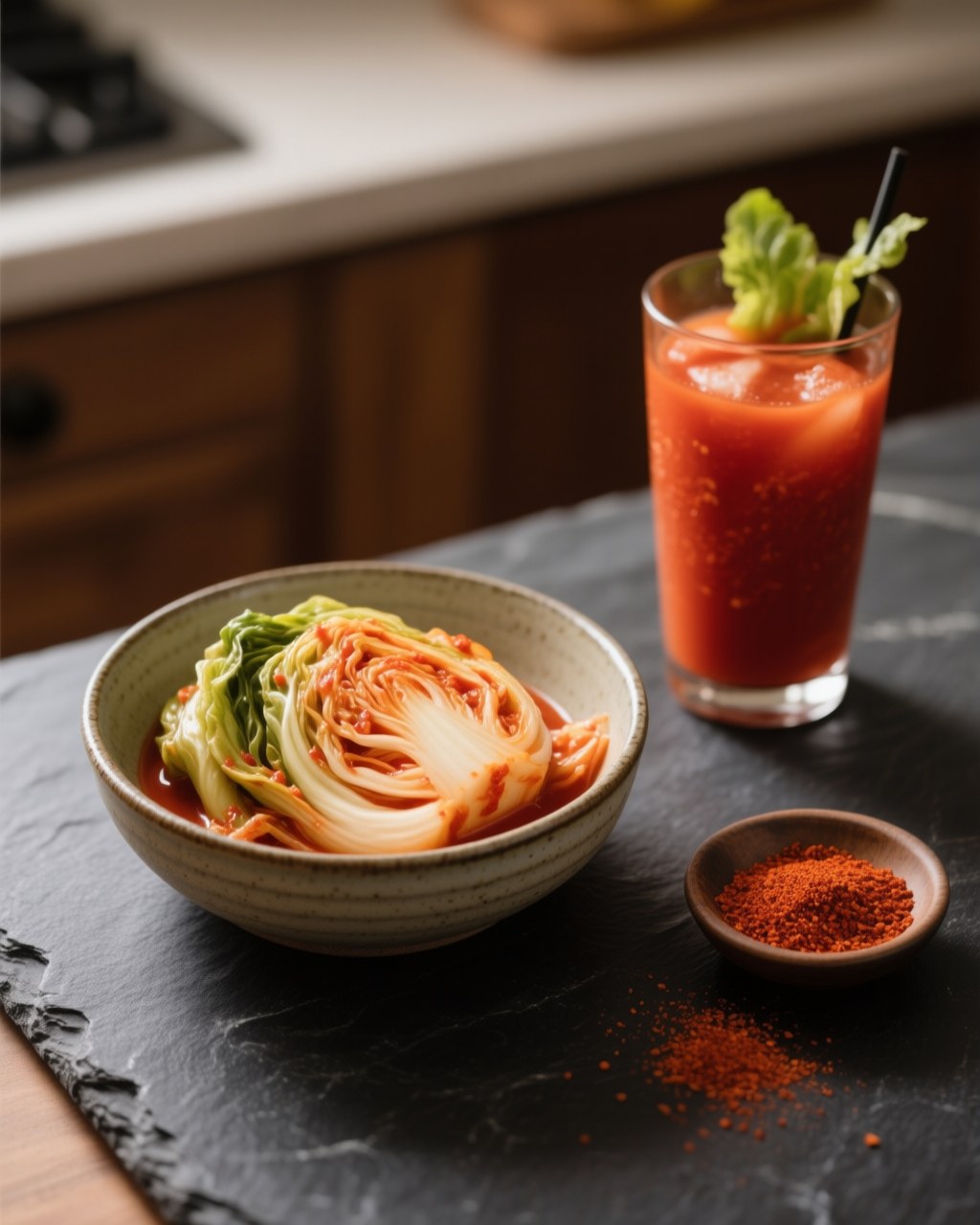
There’s a specific sound a good jar of kimchi makes when you open it — a soft hiss, sometimes a full pop, of carbon dioxide that’s been building since the cabbage went into the brine. That sound is the whole reason this drink exists. It’s not a garnish gimmick. It’s live fermentation, still working, and we wanted a Bloody Mary that tasted like that moment — the one right when you crack the lid.
Kimchi is not one thing
It’s a category, the way “cheese” is a category. Napa cabbage kimchi is the one most people picture, but the tradition spans radish, cucumber, scallion, and dozens of regional and seasonal variations, all built on the same idea: vegetables, salt, and time, with Lactobacillus bacteria doing the actual work of transformation. The gochugaru (Korean chili flake) gets the visual credit, but the sour, funky, faintly effervescent backbone underneath it is fermentation, full stop — the same family of flavor you’d find in sauerkraut or a proper dill pickle, just dressed in garlic, ginger, and fish sauce instead of dill and mustard seed.
Why this isn’t just a second Seoul Mary
We already have a kimchi-adjacent Bloody Mary on this site — the Seoul Mary leans on gochujang and soy for a glazed, chili-forward profile, with a piece of kimchi riding along on the pick almost as punctuation. This one flips the emphasis. The Kimchi Mary is built on the brine itself: sour, garlicky, faintly fishy from the salted shrimp or fish sauce most traditional kimchi recipes use, and carrying real carbonation if the batch is active enough. It’s less “chili condiment stirred into tomato juice” and more “what if the brine itself was the mixer.” Minced kimchi gets muddled straight into the shaker for texture and a last hit of cabbage crunch that survives the strain.
Why it works with tomato juice specifically
Tomato is already sitting at a natural intersection of sweet, acidic, and savory (thank glutamic acid for that last one), which is exactly the same intersection kimchi lives in. You’re not introducing a foreign flavor so much as amplifying a register the tomato juice was already hinting at. The lime brightens the top, the black pepper gives it lift, and a single dash of fish sauce underneath does what it always does in this kind of drink — vanishes as a flavor you can name and reappears as a savoriness you can’t quite place but don’t want to lose.
A practical note on brine
Not all kimchi brine is created equal. A jar that’s two or three days old will taste like salted vegetable water with some garlic in it — pleasant, but flat. You want brine from kimchi that’s had real time to ferment, at least two weeks, ideally longer, when the sourness and the fizz have both shown up.
Ready to build one? Get the full recipe: Kimchi Mary →
Leave a Reply