The Zero-Proof
Botanical Mary
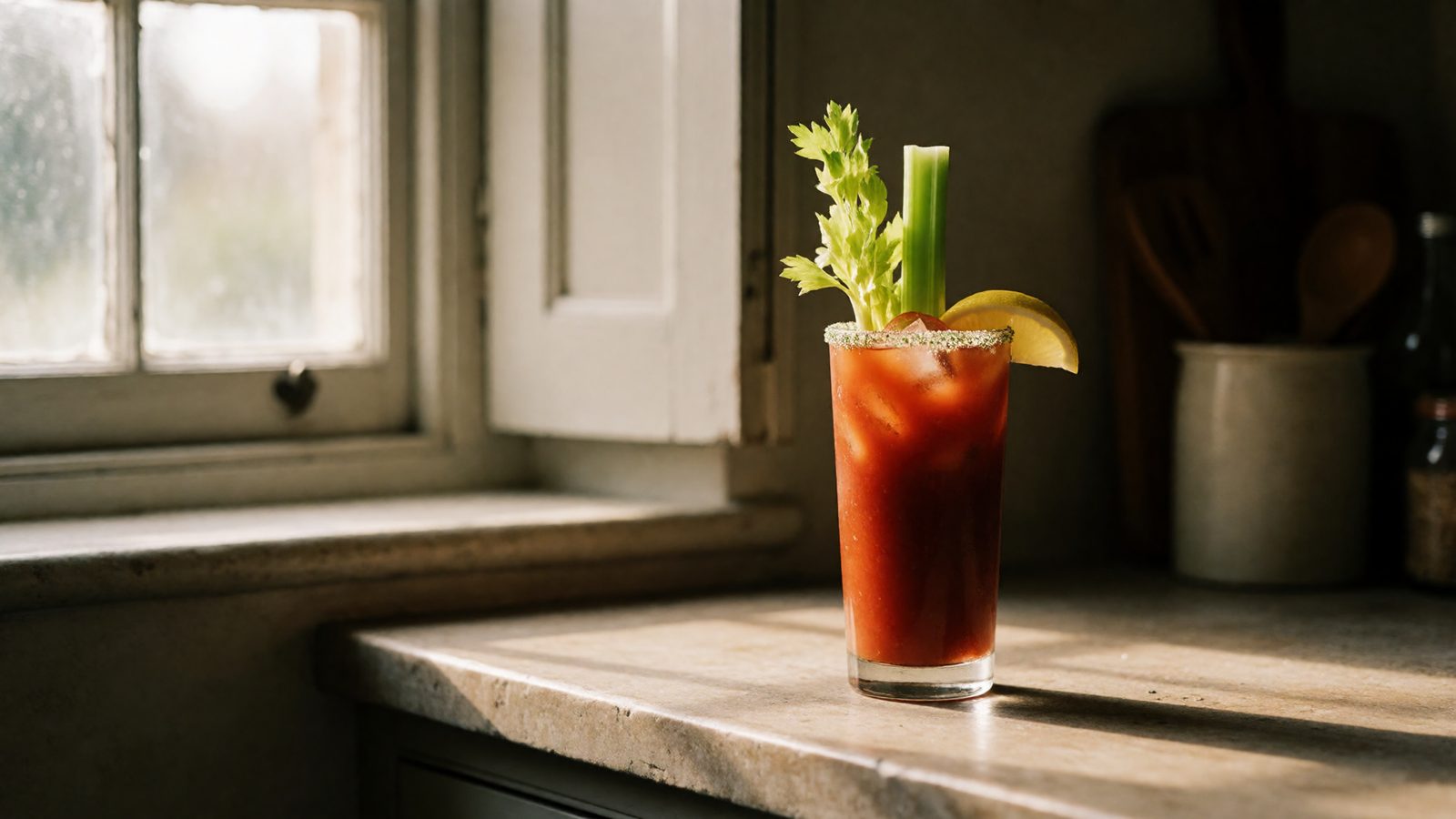
This non alcoholic Bloody Mary reconstructs the botanical structure with a modern zero-proof spirit, because removing the alcohol shouldn’t mean drinking cold soup.

This site already has a Virgin Mary recipe that simply omits the vodka. This one is different on purpose: it’s built around a category of modern non-alcoholic distillate designed to replicate a spirit’s aromatic complexity and structure, not just its absence.
- Non-alcoholic juniper-forward botanical spirit (gin-style NA distillate)2 oz
- Tomato juice4 oz
- Lemon juice0.5 oz
- Worcestershire sauce (check label — most are alcohol-free, but verify)2 dashes
- Hot sauce2 dashes
- Celery bitters, alcohol-free if available2 dashes
- Celery salt, for the rim1 tbsp
- Ice1 fill
- Celery stalk and lemon wedge, for garnish1 each
- 1Salt the rim of a tall highball glass with celery salt, using a lemon wedge to wet the rim.
- 2Fill the glass with ice.
- 3Add the NA botanical spirit, lemon juice, Worcestershire, hot sauce, and celery bitters.
- 4Top with tomato juice.
- 5Stir gently, six to eight turns.
- 6Garnish with a celery stalk and lemon wedge.
Why “category, not brand” actually matters here
The modern non-alcoholic spirits category is only a few years old and moving fast — new brands launch, formulations change, and any single brand recommendation risks going stale within a year. More importantly, these distillates vary widely in style: some lean heavily juniper and gin-like, others lean more toward amaro-style bitterness, and a few are built around single botanicals like a specific herb or citrus peel. This recipe calls for the juniper-forward, gin-style category specifically because that structure — bright top notes, a dry finish, real aromatic presence — is what stands up to a tomato base the way vodka’s neutrality or gin’s own botanicals traditionally do.
Why this isn’t just the existing Virgin Mary
Simply omitting vodka from a Bloody Mary leaves a gap where the spirit’s weight and aromatic lift used to be — the drink can taste thin or flatly vegetal without it, which is a common complaint about virgin cocktails generally. A NA botanical distillate is formulated specifically to replicate a spirit’s mouthfeel and aromatic complexity through distillation and botanical extraction, not just flavored water. Building around one, rather than leaving the slot empty, is the actual fix for that thinness, not a cosmetic difference.
Reading a bottle before you buy
Look for “distilled” or “non-alcoholic spirit” on the label rather than “mocktail mixer” or “syrup” — the distillation step is what gives these products real aromatic depth instead of just concentrated flavoring. A short ingredient list dominated by named botanicals (juniper, angelica root, citrus peel) rather than a long list of natural flavors is usually a good sign of a more serious product.
Non Alcoholic Bloody Mary: Frequently Asked Questions
How do you make a zero-proof Bloody Mary taste good, not just “not bad”?
Build it around a real distilled non-alcoholic spirit rather than simply leaving the alcohol out. The spirit’s structure and aromatic lift are what a Bloody Mary needs to avoid tasting thin, not the alcohol itself.
What non-alcoholic spirits work best with tomato?
Juniper-forward, gin-style NA distillates tend to work best — their bright, dry, botanical profile plays the same structural role gin or vodka plays in an alcoholic build. Amaro-style NA spirits are also worth trying if you want more bitterness.
Is a Virgin Mary better for a hangover than a real one?
By definition it won’t contribute to a new hangover, since there’s no alcohol in it, but it also won’t do anything to resolve one already in progress beyond the general benefits of hydration and salt. See this site’s hangover physiology piece for the full explanation of why that is.
Does removing the alcohol change how much salt or acid the drink needs?
Not dramatically, but alcohol does carry some flavor and a slight warming sensation that a non-alcoholic build needs to make up for elsewhere — which is part of why this recipe uses a slightly fuller pour of both Worcestershire and hot sauce than a minimal classic build might.
Sources
- No claims in this recipe depend on a specific scientific or safety citation; the NA spirits category recommendation is a general product-category description, not a specific health or safety claim.
A note on how this was written
The reasoning about NA spirit categories and why a distilled product outperforms flavored syrup is based on how these products are generally formulated and marketed, not a personally tasted brand comparison. Categories are named deliberately instead of specific brands, per the instruction to keep this evergreen; a personal brand recommendation from Gene would be a natural addition here.
Related Reading
- The Virgin Mary — Making a Non-Alcoholic Version Worth Drinking
- The Hangover Myth
- For the classic build this one departs from, see the bloody mary recipe.