
The Full-Sour
Bloody Mary
Fermented in salt water, no vinegar, no shortcuts. If your pickle jar says “vinegar” on the label, this isn’t the brine you want.
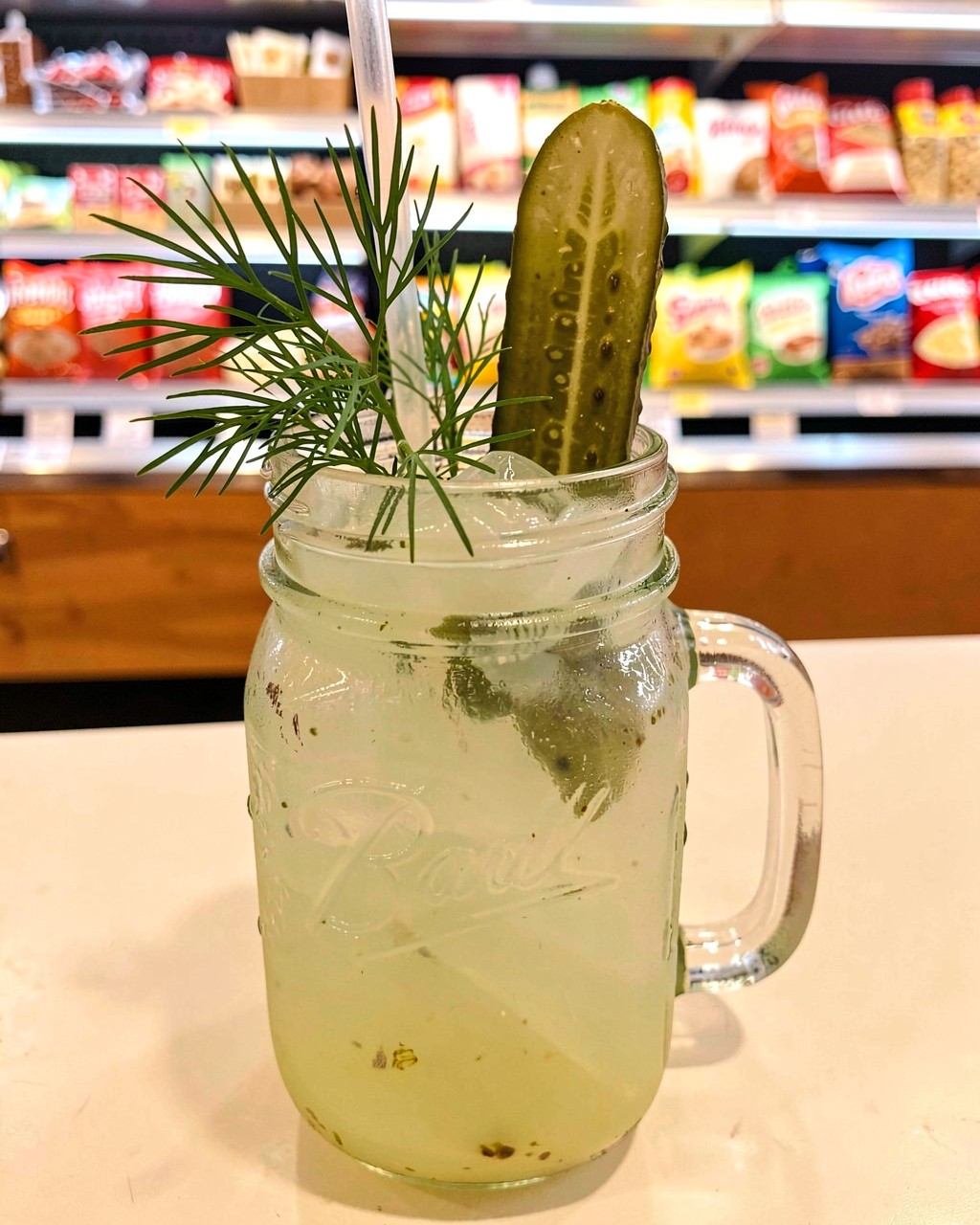
We’ve written about pickle juice in Bloody Marys before, but almost all of that classic pairing — including most of what’s online — is built on quick, vinegar-based brine. This is the other kind: true, old-school, lacto-fermented deli pickle brine.
- Vodka2 oz
- Tomato juice4 oz
- Full-sour pickle brine (fermented, garlic-dill deli-style)1.5 oz
- Fresh lemon juice0.25 oz
- Worcestershire sauce2 dashes
- Prepared horseradish1/4 tsp
- Garlic clove, finely grated1 small (about 1/4 tsp)
- Black pepper2 grinds
- Coarse salt and cracked pepper, for the half rimAs needed
- Ice1 fill
- Full-sour pickle spear and fresh dill sprig, for garnish1 each
- 1Half-rim a pint glass with coarse salt and cracked pepper; fill with ice.
- 2In a shaker, combine vodka, tomato juice, pickle brine, lemon juice, Worcestershire, horseradish, grated garlic, and black pepper.
- 3Add ice and shake for 10 seconds.
- 4Strain into the prepared glass over fresh ice.
- 5Garnish with the pickle spear and a sprig of fresh dill. Finish with a grind of black pepper.
What actually separates a full-sour from a vinegar pickle
A vinegar (or “quick”) pickle is submerged in a hot brine of vinegar, water, salt, and sugar — no fermentation happens; acetic acid does the pickling within hours or a day or two. A full-sour deli pickle is different: cucumbers go into a plain salt brine with garlic, dill, and spices, and Lactobacillus bacteria slowly convert the cucumbers’ natural sugars into lactic acid over one to several weeks, with no vinegar added at any point. This drink uses store-bought deli pickles. If you make fermented pickles at home, use a tested recipe, such as those from the National Center for Home Food Preservation.
“Full-sour” vs. “half-sour”
“Full-sour” specifically refers to a pickle fermented the whole way through, as opposed to a “half-sour” or “new” pickle pulled from the brine early while still bright green and only lightly fermented. Full-sours are typically a duller, more olive-green color throughout, cloudier in the jar, and noticeably more pungent — the kind pulled from an actual deli barrel, not a shelf-stable jar.
Full-Sour Bloody Mary: Frequently Asked Questions
How do I know if my pickle brine is fermented, not vinegar-based?
Check the label. Ingredients should read cucumbers, water, salt, garlic, dill, and spices — no vinegar listed. Many will say “fermented in brine,” “old world,” or reference live or active cultures directly.
Can I use regular vinegar pickle juice instead?
You can, and it’ll still make a good Bloody Mary, but it’s a meaningfully different drink — sharper, more one-dimensional acidity instead of the rounder, savory-complex tang fermented brine provides.
Where do I find full-sour pickles?
Refrigerated sections of well-stocked grocery stores, or a deli counter that sells pickles loose from a barrel. Shelf-stable jars are almost always vinegar-pickled instead.
Sources
- National Center for Home Food Preservation (University of Georgia) — General Information on Fermenting, general guidance on fermenting vegetables; its tested fermented dill pickle recipe uses some vinegar.
A note on how this was written
The National Center for Home Food Preservation page linked above is general fermentation guidance; its tested fermented dill pickle recipe uses some vinegar, unlike a traditional full-sour. The full-sour/half-sour distinction is standard, widely documented deli and pickling knowledge. The drink build is this site’s own recipe development.
Related Reading
- Ingredient guide: Pickle juice in Bloody Marys
- Ingredient guide: The Worcestershire question
- Want the story behind this one? Read Real Brine, No Vinegar →