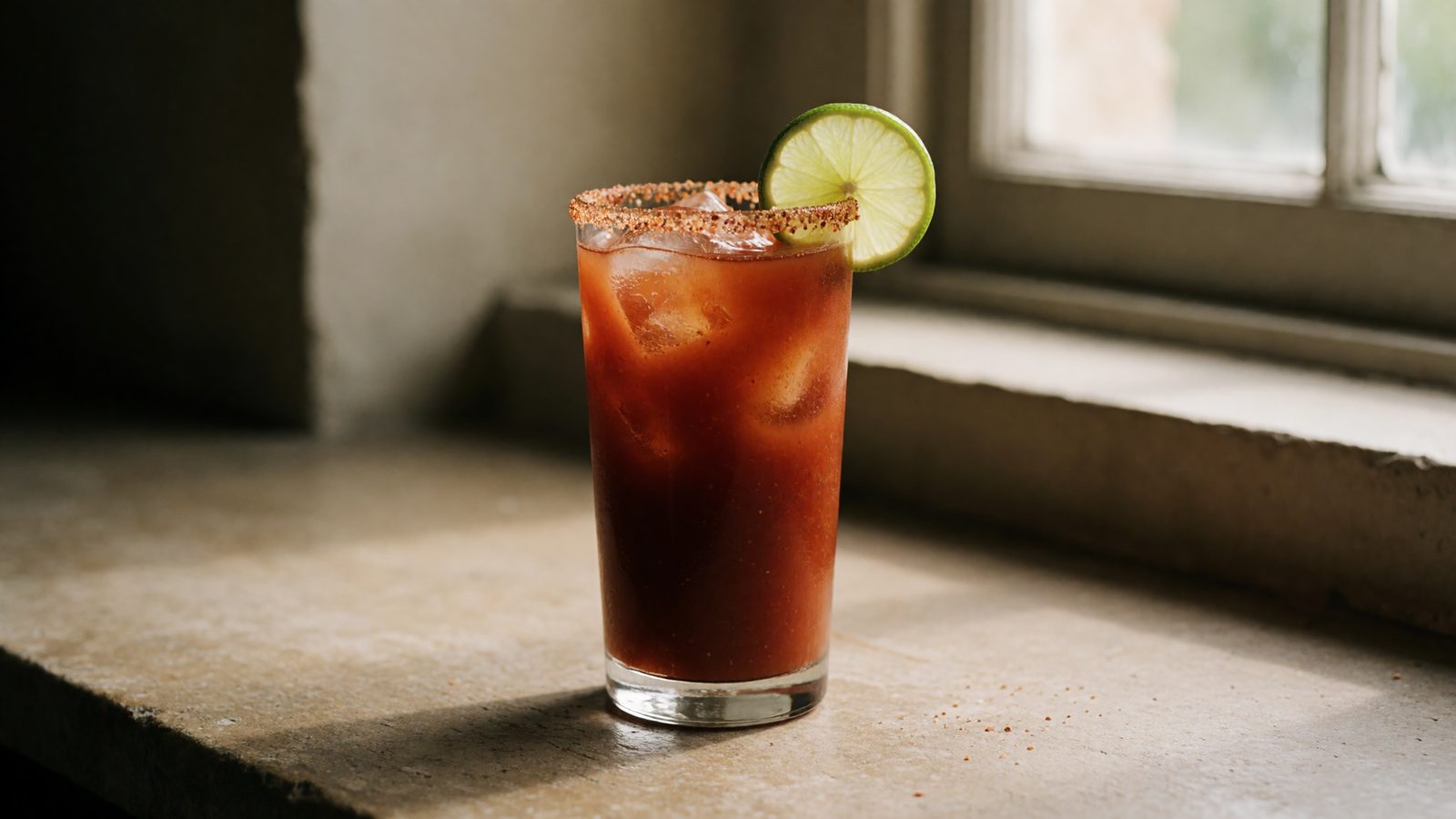
The Chipotle Adobo
Bourbon Mary
This chipotle Bloody Mary pairs bourbon, which demands respect, with rich, smoky chipotle adobo, recalibrating the acid to match the oak.

This is a different build from this site’s other bourbon Mary, the Bloody Derby, which chases bourbon’s vanilla and oak with brown sugar. This one goes the opposite direction — leaning into smoke and heat, and pulling the acid up to meet it, rather than sweetening it down.
- Bourbon2 oz
- Tomato juice4 oz
- Chipotle pepper in adobo, minced, plus 1 tsp adobo sauce1 pepper
- Fresh lime juice0.75 oz
- Worcestershire sauce2 dashes
- Smoked salt, for the rim1 tbsp
- Ice1 fill
- Lime wheel, for garnish1
- 1Salt the rim of a tall highball glass with smoked salt, using a lime wedge to wet the rim.
- 2In the bottom of a mixing glass, muddle the minced chipotle and adobo sauce with the bourbon briefly — just enough to bloom the chipotle’s oils into the spirit, about 30 seconds.
- 3Add tomato juice, lime juice, and Worcestershire. Fill with ice.
- 4Stir gently, eight to ten turns — a few more than usual, to fully integrate the muddled chipotle.
- 5Strain into the prepared glass over fresh ice.
- 6Garnish with a lime wheel.
Why bourbon needs recalibrating here, not just heat
Bourbon already carries vanilla, caramel, and oak from barrel aging — a naturally sweet, rounded profile. Chipotle in adobo adds smoke and a building, dry heat, along with the vinegar and tomato base the adobo sauce itself is made from. Left alone, that combination can tip heavy and one-note: smoke plus oak plus tomato base, with nothing bright cutting through. The lime juice here isn’t a garnish afterthought, it’s doing structural work, pulling enough acid into the glass to keep the smoke and oak from just sitting on top of each other.
Blooming the chipotle, and why it’s not just heat
Briefly muddling minced chipotle directly with the bourbon, rather than just stirring it into the finished drink, dissolves more of the pepper’s oil-soluble compounds into the alcohol — the same principle as blooming dried chiles in warm oil before adding them to a sauce. That gets you the chipotle’s smokiness and fruitiness distributed through the whole drink, not just a hit of straight heat floating on top.
How this compares to the Bloody Derby
Same base spirit, opposite direction. The Bloody Derby adds brown sugar to lean into bourbon’s existing sweetness and keep the whole drink rounded and mellow. This build adds smoke, heat, and extra acid instead, pushing the drink toward something closer to a smoky, bourbon-spiked salsa than a mellow morning sipper. If the Bloody Derby is the gentler introduction to bourbon in a Bloody Mary, this is the version for whoever found that one too polite.
Chipotle Bloody Mary: Frequently Asked Questions
Does bourbon work in a spicy Bloody Mary, or is it too sweet?
It works, but needs balancing — bourbon’s natural vanilla and caramel sweetness can tip a heavily spiced build too rich without enough acid to cut through it. This recipe uses lime rather than lemon specifically for its sharper acid.
What’s the difference between chipotle powder and chipotle in adobo?
Chipotle in adobo is the whole smoked, dried jalapeño rehydrated and packed in a vinegar-tomato sauce, carrying more moisture, tang, and complexity than the dried powder. This recipe calls for the canned adobo version specifically because the sauce itself contributes acid and body the powder doesn’t have.
Can you make this less spicy without losing the smoke?
Yes — use just the adobo sauce and skip mincing in the pepper itself, or slit the chipotle open and muddle it whole before straining it out, which pulls smoke and flavor without leaving pepper flesh (and most of its heat) in the glass.
Sources
- No claims in this recipe depend on a scientific or safety citation beyond standard, widely known culinary technique (blooming dried chiles in fat or alcohol to extract oil-soluble flavor compounds).
A note on how this was written
The blooming technique and the acid-rebalancing logic are standard culinary reasoning applied to this specific combination, not a personally tasted and tuned result. Treat the lime amount as a starting point and adjust for how spicy your particular can of chipotles in adobo runs, since brands vary meaningfully in heat.
Related Reading
- The Bloody Derby — the milder bourbon build this one departs from
- Hot Sauce in Bloody Marys
- For the classic build this one departs from, see the bloody mary recipe.