
The Barrel-Aged
Bloody Mary
Built on a barrel-aged, fermented hot sauce — deeper and rounder than a fresh chili paste would give you.
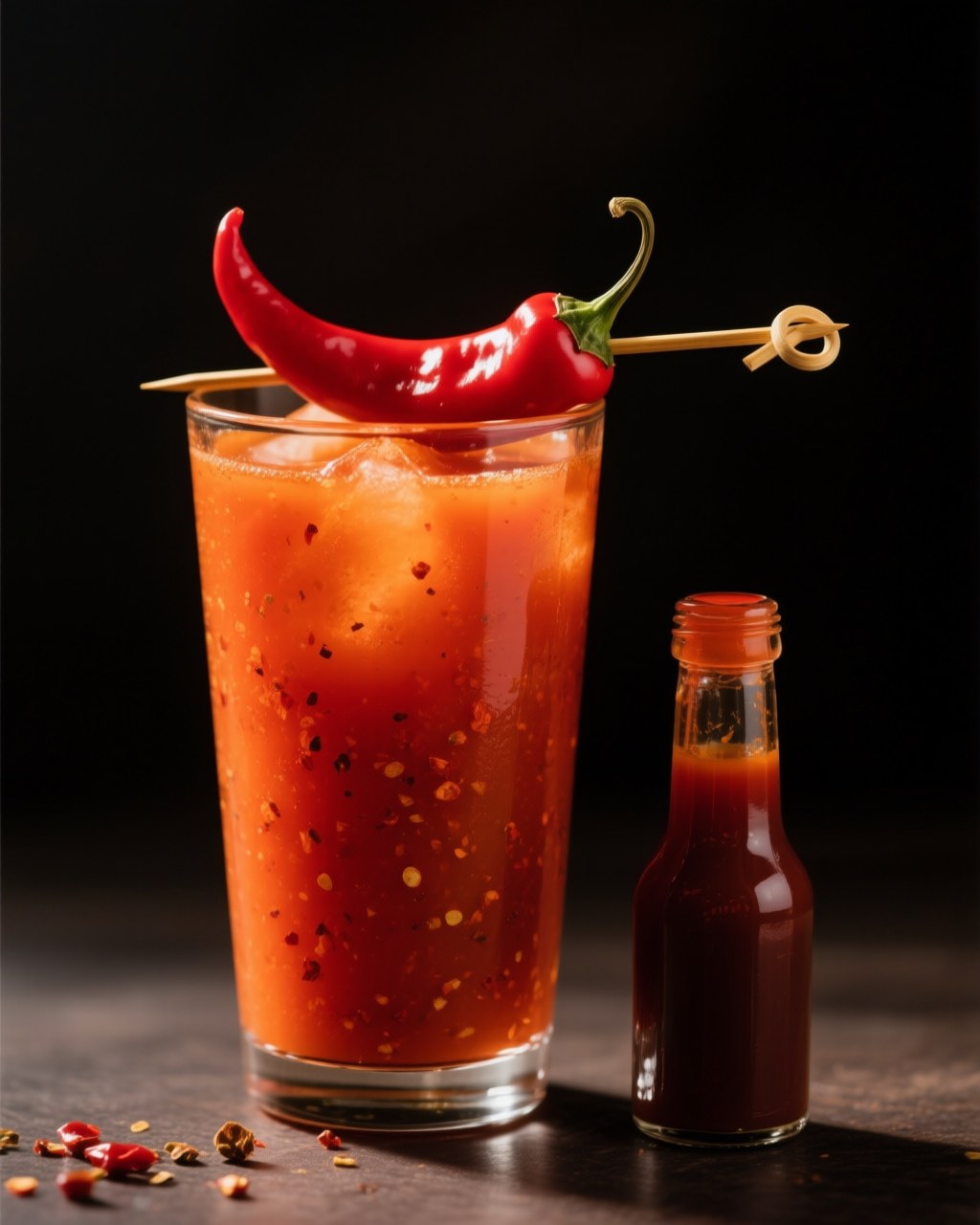
Two hot sauces made from the exact same pepper can taste completely different depending on whether that pepper was fermented for a year or blended fresh yesterday. This recipe is built to make that difference tastable.
- Vodka2 oz
- Tomato juice4.5 oz
- Fresh lime juice0.5 oz
- Barrel-aged fermented hot sauce (Tabasco-style pepper mash), plus more to taste1 tsp
- Worcestershire sauce2 dashes
- Prepared horseradish1/4 tsp
- Celery salt1/4 tsp
- Black pepper2 grinds
- Cracked black pepper and salt, for the half rimAs needed
- Ice1 fill
- Celery stalk, for garnish1
- 1Half-rim a pint glass with cracked black pepper and salt; fill with ice.
- 2In a shaker, combine vodka, tomato juice, lime juice, fermented hot sauce, Worcestershire, horseradish, celery salt, and black pepper.
- 3Add ice and shake for 10 seconds. Taste and adjust the hot sauce up in 1/4 tsp increments if you want more heat — fermented hot sauce builds more than it burns, so it’s easy to underestimate at first taste.
- 4Strain into the prepared glass over fresh ice.
- 5Garnish with the celery stalk and finish with a few extra drops of hot sauce dotted on the surface.
What barrel-aging actually does to peppers
The classic process — the one behind Tabasco — starts with crushed peppers mashed with salt, then packed into white oak barrels and left to ferment for up to three years, with the barrel tops sealed with salt to form a protective layer that still allows fermentation gases to escape (TABASCO’s own published account of its barrel-aging process). The aged mash is then blended with vinegar to finish the sauce.
Why this changes where the heat sits in the drink
Fresh chili paste — raw or lightly cooked chili blended with vinegar or citrus, no fermentation involved — delivers heat that hits faster and sharper, more purely capsaicin with less going on around it. A barrel-aged fermented hot sauce tends to integrate instead: the heat, the tang, and the tomato’s own acidity start to read as one continuous flavor rather than two stacked ones.
Barrel-Aged Mary: Frequently Asked Questions
What makes a hot sauce “fermented” versus just spicy?
Fermented hot sauce starts as crushed peppers and salt, left to ferment via naturally occurring bacteria for months to years before vinegar is added. A fresh chili-based hot sauce skips fermentation entirely, blending raw or cooked chili with vinegar or citrus directly.
Can I use a fresh chili hot sauce instead?
You can, but you’ll get a sharper, more front-loaded heat instead of the rounder, integrated heat this recipe is built around. Try both side by side — it’s the best way to actually taste the difference fermentation makes.
How spicy is this drink?
Medium-high as written, and genuinely adjustable — start with 1 tsp of hot sauce and add more in 1/4 tsp increments, tasting as you go.
Sources
- TABASCO Brand — About Our Barrels, for the barrel-fermentation process.
A note on how this was written
The barrel-aging process description is drawn from TABASCO’s own published account of its method, linked above; the broader claim that fermentation changes perceived heat character (rounder, more integrated vs. sharp and front-loaded) reflects widely documented fermentation-flavor principles rather than a single citation. The drink build is this site’s own recipe development.
Related Reading
- Ingredient guide: Celery salt, explained
- Ingredient guide: The Worcestershire question
- Want the story behind this one? Read What Time Does to Heat →